
The average digital marketing or business operations team today runs between 5 – 12 AI tools and agents concurrently. There’s one for drafting content, another for analysing campaign data, one for lead tracking, and some more for managing customer interactions.
Amidst all of these AI tools and autonomous agents, the actual work these professionals do often gets fragmented. And the humans overseeing the tools lose track of what’s actually getting done.
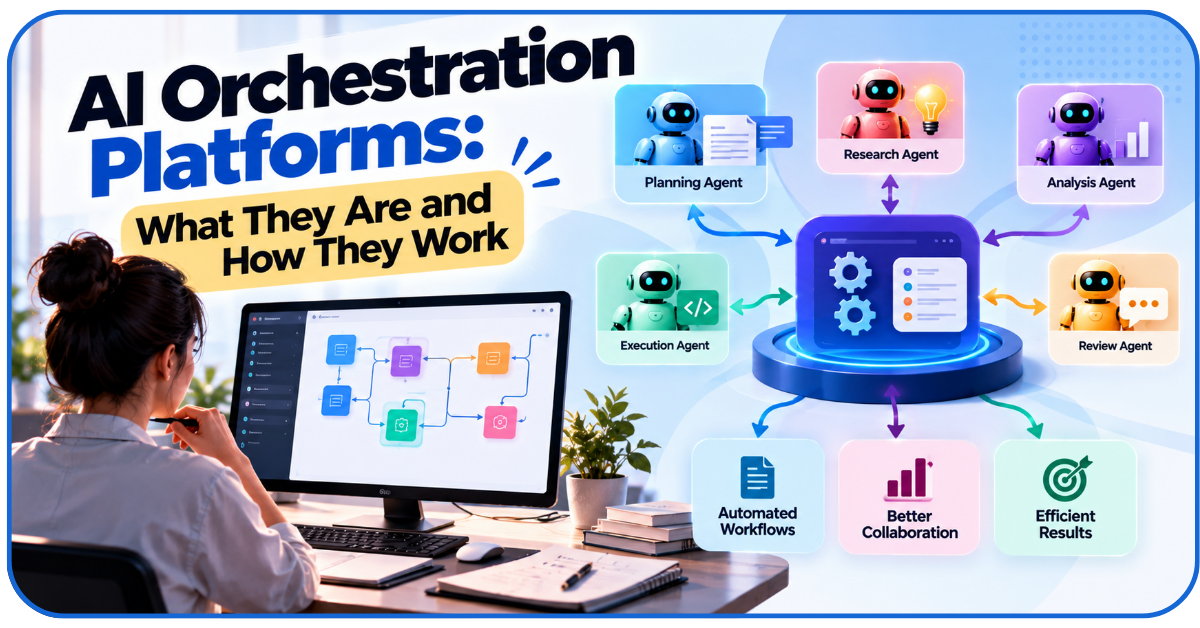
AI orchestration platforms solve this exact problem. They coordinate all AI models, agents, APIs, and data sources within a single governed workflow.
So, humans don’t have to manually coordinate and oversee all of their AI tools anymore. All they need is one top-quality AI agent orchestration platform to oversee all of their AI components.
These platforms have already been widely adopted by managed IT providers and programming teams that’ve always been at the forefront of AI adoption. Now, marketing teams that also use multiple AI tools and agents to optimize different workflows are catching up.
We’ll review 9 platforms that are the kings of multi-tool and multi-agent orchestration. We’ll explain what they do and how they can help digital marketing and customer-facing teams.
What Are AI Orchestration Platforms?
To understand these platforms, we first need to understand how most businesses adopt AI technologies.
Single AI Tool
Most teams start small, usually with a single tool. A content writer might use ChatGPT to draft a blog post. Or, a sales rep might use an AI transcription tool to summarize calls.
AI Workflow
The next stage is using multiple tools for various tasks. So, the same content writer will now use:
- One AI tool for research
- Another for drafting content
- A few more for SEO optimization, generating social media captions, etc.
This is how AI-based workflows start to take shape within organizations.
AI Agents
Then, agents enter the equation.
Unlike a simple AI tool that reacts to prompts, autonomous AI agents can:
- Perceive their environment
- Take independent actions to achieve goals
- Make independent decisions regarding their workflows
So, a ‘content agent’ can…
- Monitor trending topics
- Generate blogs on those topics
- Queue them for human review
…all without being prompted.
Agents give teams enormous capabilities. But they also introduce a lot of complexity.
AI Orchestration
Let’s say 3 content agents are working in parallel on different parts of a content campaign.
How does a human track what each one is doing and whether they are aligned?
These are the types of coordination problems that AI orchestration platforms solve. They serve as the coordination layers that sit above individual AI tools and agents and define:
- How work flows between them
- What happens when steps fail
- Where human oversight is required
- How data moves from one component to the next
Instead of a human manually connecting each of these steps, an AI orchestration platform autonomously manages all of these connections.
These platforms can also autonomously:
- Choose specific AI models for specific tasks (Claude for copywriting or Perplexity for research)
- Integrate with APIs and apps to optimize specific tasks (like updating CRMs)
- Pull relevant data from multiple data sources
- Perform multi-agent orchestration to ensure that each agent receives the right input, operates within its defined scope, and passes its output to the next agent in the chain
We’ll review 9 highly-rated AI orchestration platforms in the next section to give you a better idea of how helpful these platforms can be.
9 Leading AI Orchestration Platforms
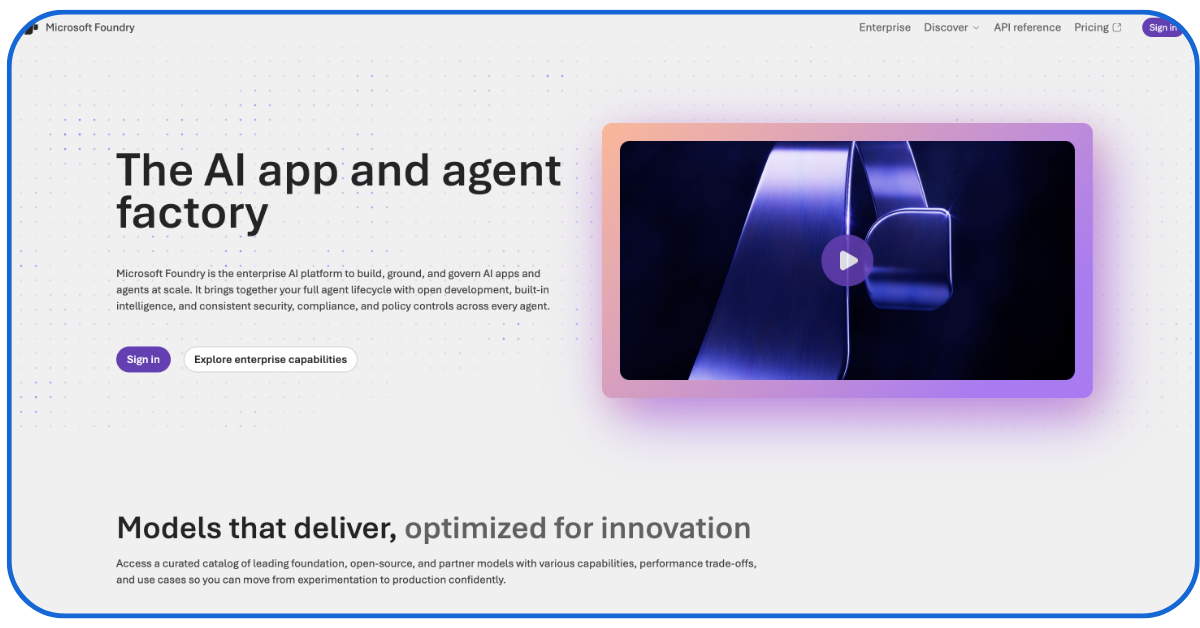
1. Microsoft Azure AI Foundry
Is your business already embedded in the Microsoft ecosystem — like most businesses are?
Then, working with Microsoft Foundry is the natural starting point.
The platform unifies agents, models, and tools under a single management grouping. It lets you design, customize, and manage a variety of generative AI apps and agent workflows.
You can let multiple agent steps run in parallel, and then refine the results later in the workflow. It’s one of the few AI orchestration platforms that offer:
- Access to 1400+ tools, including Code Interpreter, File Search, and Bing Search
- Enhanced memory capabilities
- Knowledge integration between your agents and Microsoft Foundry’s IQ knowledge bases
- Deep integration with Microsoft 365, Dynamics 365, and Power Automate
Over 70,000 organisations – most of them Microsoft-based- already use this platform.
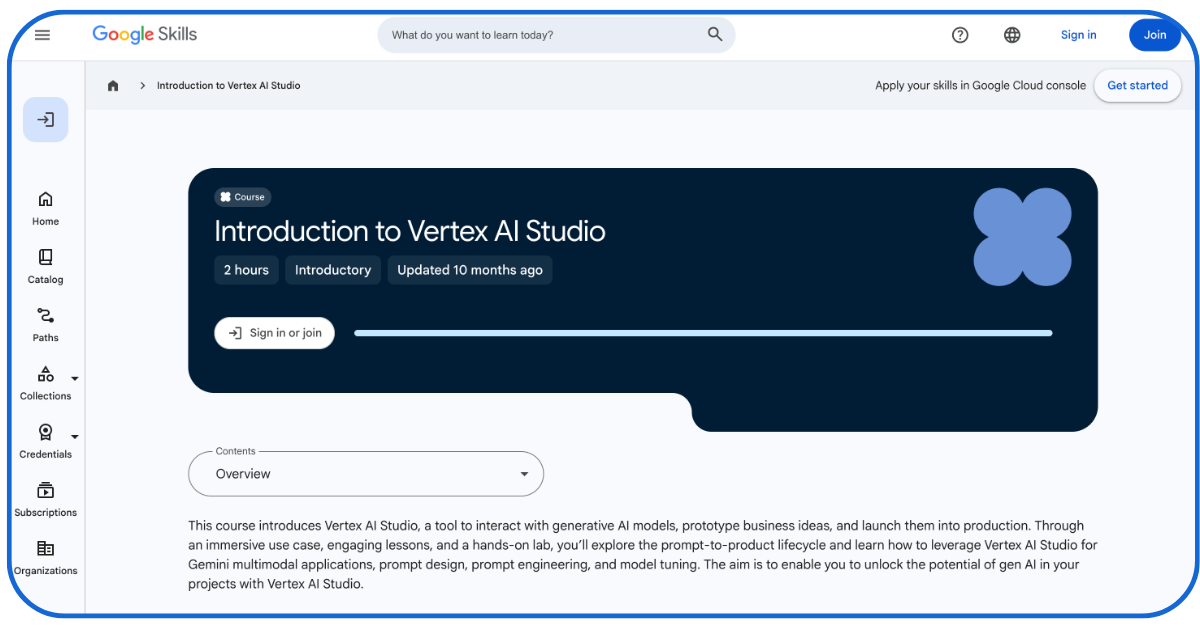
2. Google Vertex AI
What if your enterprise is not Microsoft, but Google Cloud-based?
Or, if you use Google’s BigQuery dataset for keyword research?
Then Vertex AI is the most obvious AI agent orchestration platform for you. With it, you can feed multi-agent workflows directly into your Google Workspace apps and get access to:
- A single destination for technical teams to build, scale, govern, and optimise AI agents
- 200+ leading AI models
- Agent Studio – a low-code interface for business users to customize agent-to-agent orchestration
The low-code Agent Studio is currently not mature enough to execute super-complex workflows.
To do that, you’ll have to use the coding-based Agent Development Kit (ADK), for which you might need to hire developers.
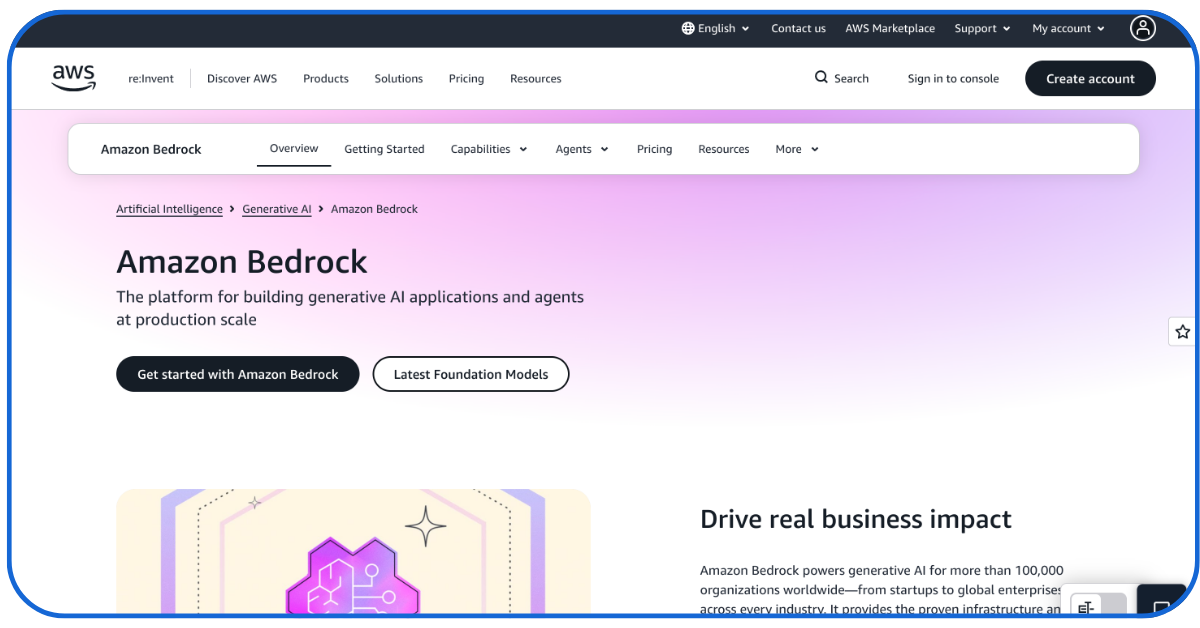
3. Amazon Bedrock
We’ve discussed AI agent orchestration platforms that suit Microsoft- and Google-based businesses.
This one’s for organisations running on AWS. With Bedrock, you get access to the top foundation models from Anthropic, Meta, Mistral, and Amazon’s own Titan models through a unified API.
Agent orchestration is the added supervisory layer on top of these models. Bedrock Agents use the reasoning capabilities of these foundation models to:
- Process user requests
- Gather information from various data sources
- Auto-complete tasks by calling necessary APIs
- Facilitate multi-agent collaboration
Each agent will focus on specific tasks under the coordination of a supervisor agent. This supervisor-collaborator model mirrors how human teams actually solve complex business challenges.
Bedrock also integrates freely with Lambda, EventBridge, and other AWS services.
4. IBM watsonx
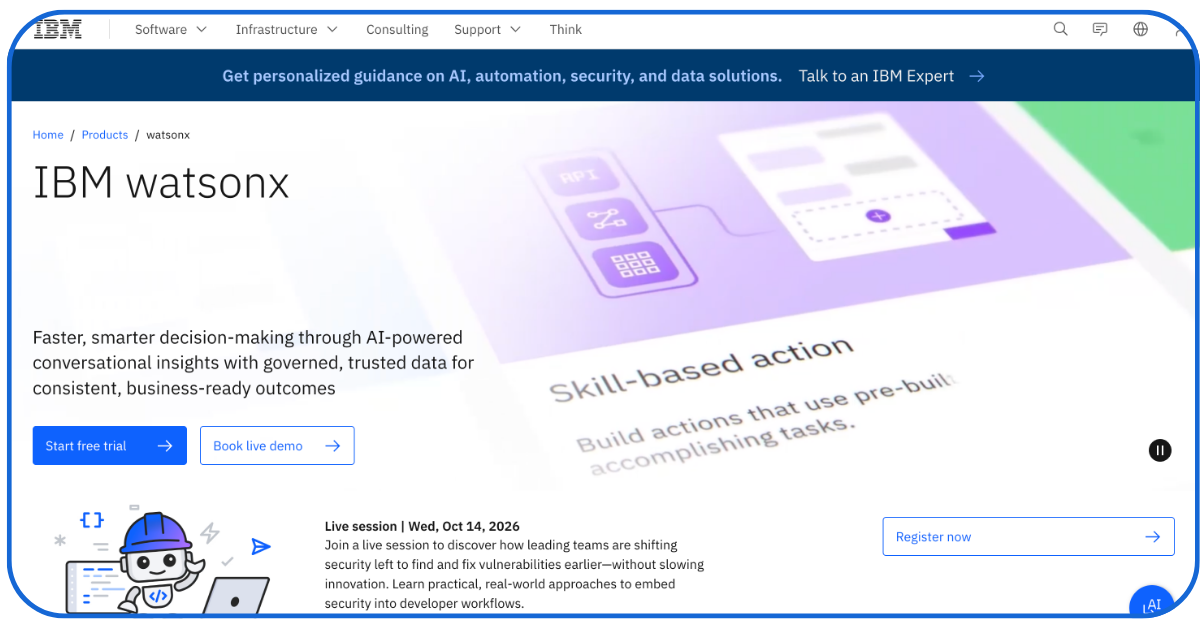
IBM watsonx prioritises control and compliance over speed-of-deployment or model access. It’s one of the leading AI orchestration platforms for large-scale, compliance-centric enterprises.
The Agentic Control Plane in this platform gives a centralised experience for operating, governing, and scaling AI agents across an enterprise environment. You get:
- End-to-end visibility into what your agents are doing
- Built-in controls to closely govern your AI tools’ behaviour
- A shared catalogue for reuse
- Scheduling options to automate recurring work
Smaller teams that need speed over compliance may not prefer this governance-first approach.
5. LangChain/LangGraph
The platforms so far have been easy-to-adopt enterprise suites.
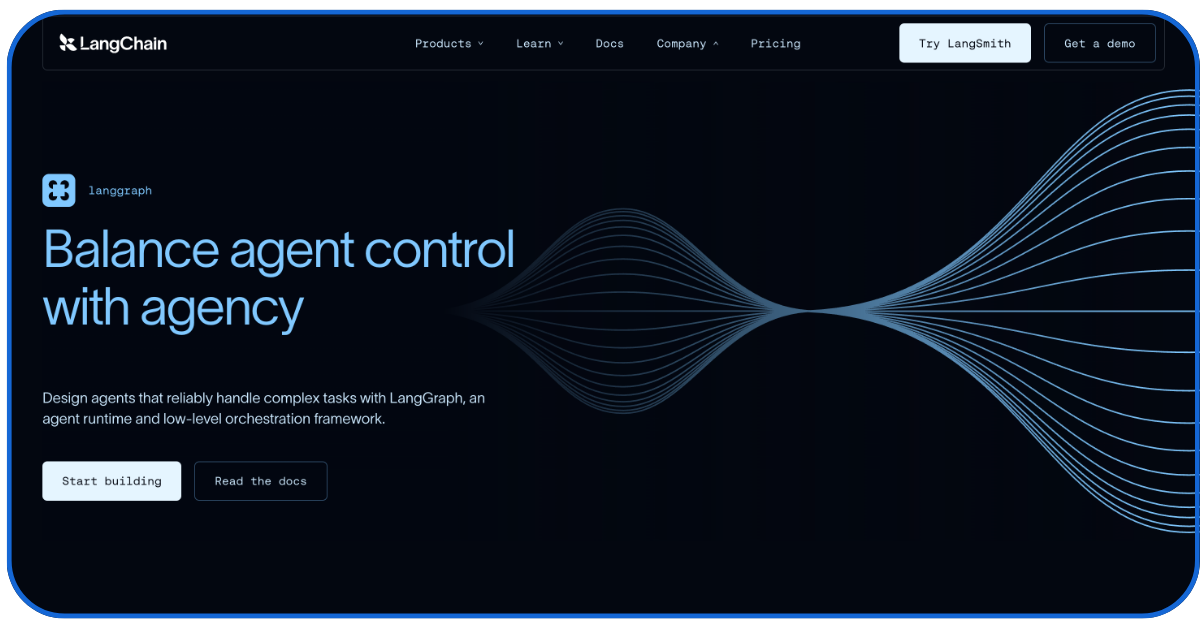
LangChain/LangGraph is for teams that employ Python/Typescript developers. It gives these developers the building blocks to custom-build the stateful, multi-agent systems they need.
That’s how it offers an incredible degree of control over all multi-agent orchestration efforts. But it’s not suitable for teams without engineering resources.
6. CrewAI
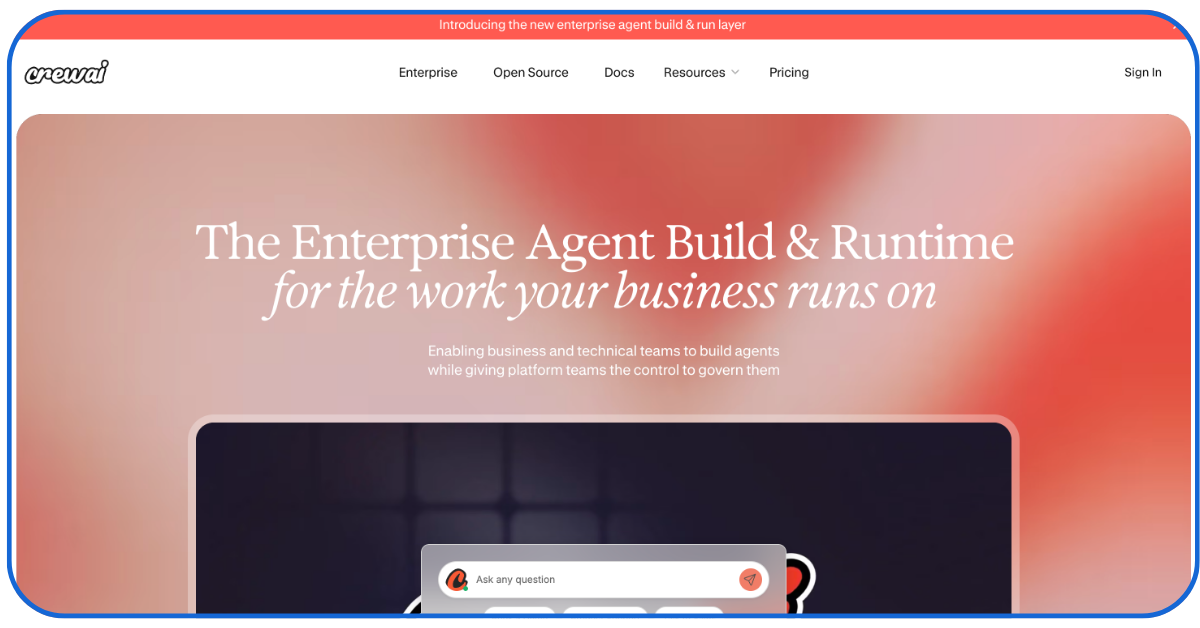
A ‘Crew’ on CrewAI is a team of autonomous agents that collaborate to solve specific tasks.
Agents in these ‘crews’ get explicit roles: Researcher, Writer, or Manager. Developers can then orchestrate these AI agents and build complex workflows around them.
But CrewAI is a less flexible AI agent orchestration platform than LangGraph for non-linear workflows.
It’s better-suited for performing specific role-based tasks. A marketing team can define ‘Research-Analyst’ agents, ‘Content-Writer’ agents, and ‘SEO’ agents, and then give them shared objectives.
CrewAI will then oversee how these related agents collaborate, delegate tasks, and their outputs’ quality.
But if you add a different agent – like ‘Customer-Service-Agent’ to this mix – output quality may drop.
7. Dify
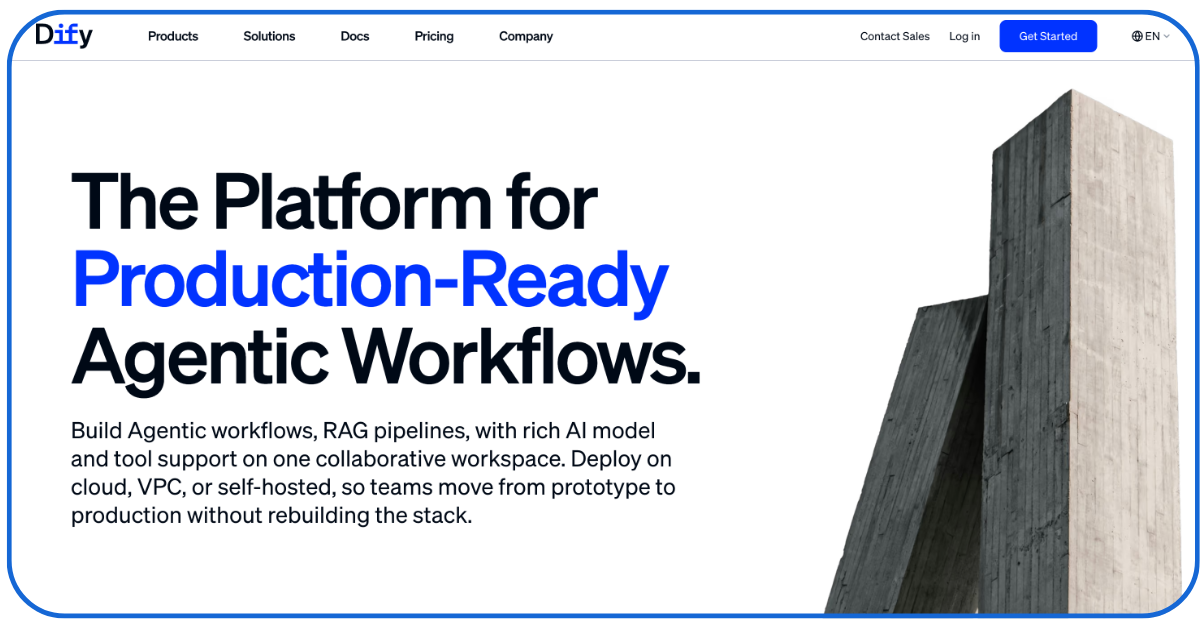
While CrewAI and LangGraph are developer-focused AI orchestration platforms, Dify is far more novice-friendly and provides:
- A visual, easy-to-use interface where you can easily build, deploy, and manage your complex agentic workflows and data sources
- A drag-and-drop node system for calling models, retrieving knowledge, running code, or branching on conditions
- Support for 1000+ LLMs, various data sources, plugins, and tools
With Dify, a content manager can build a workflow that takes a topic input, retrieves relevant documents from a knowledge base, generates a draft, and publishes it to a CMS — all without coding.
But it can’t create highly complex, custom workflows like the code-first frameworks.
8. AutoGen (by Microsoft)
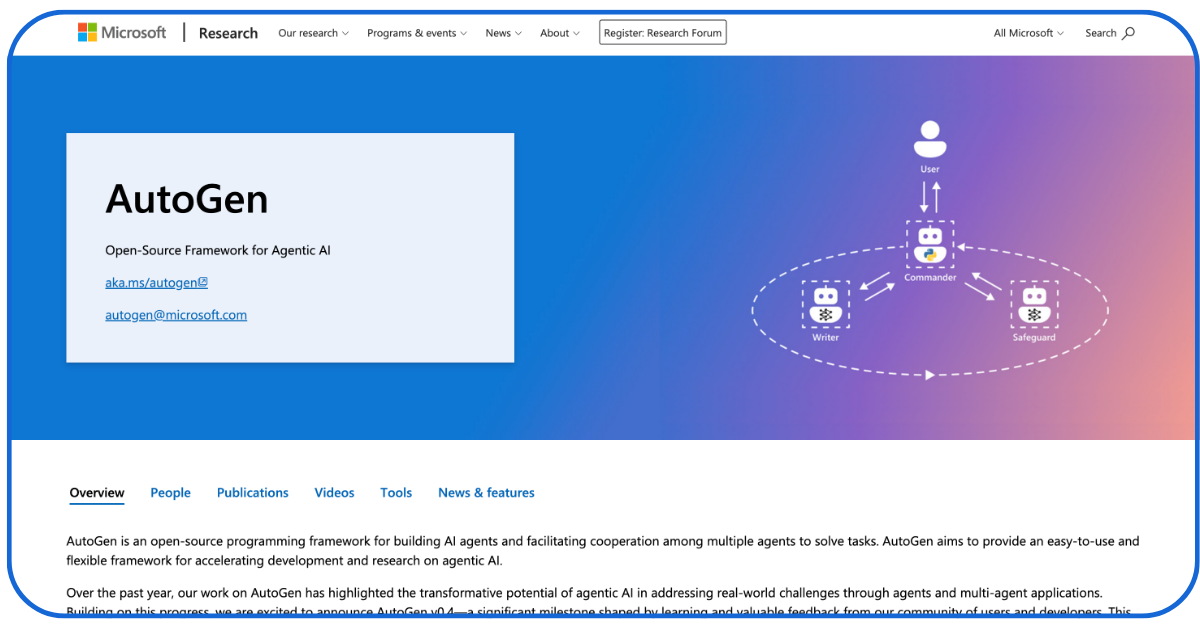
AutoGen has a fundamentally different approach to multi-model and multi-agent orchestration. Instead of defining explicit workflows, it lets agents solve problems by conversing with each other.
Specialised agents assume different roles — coding, reviewing, planning, or executing — and then communicate with one another to iteratively improve outcomes. These conversable agents:
- Can be tailored to specific roles and behaviours
- Support both fully-autonomous operation and optional human oversight
- Integrate freely with LLMs and Microsoft tools
Outputs from this conversation-based orchestration, however, can be less predictable than the platforms that let you closely define your agents’ workflows.
9. OpenAI Platform
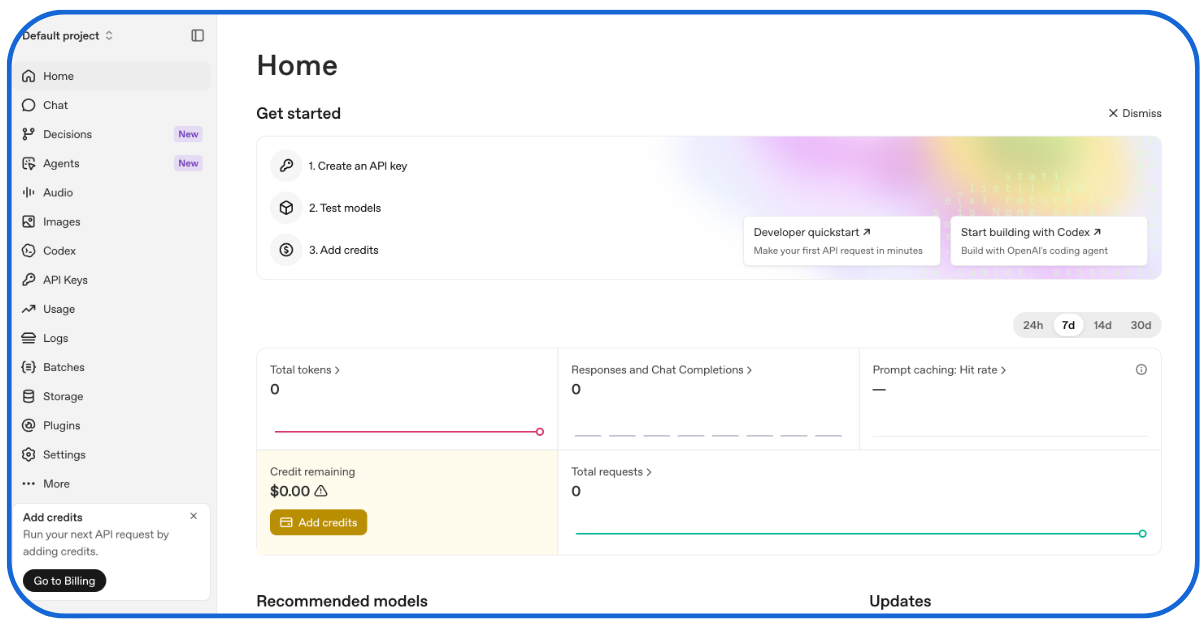
Many teams now routinely use OpenAI models for content generation or analysis.
The OpenAI Platform is for them. You get two tools — ‘Agents API’ and ‘Agents SDK’ — to build your own AI apps, agents, and workflows. Developers can:
- Define the agents’ scope
- Give the agents access to a variety of OpenAI-native tools
- Use the APIs to manage the execution
This platform is great for running complex, multi-step tasks over long periods. But it’s one of those AI orchestration platforms that suits teams with developers who can oversee the technical tasks.
How AI Orchestration Can Support Digital Marketing
Here are some essential tasks digital marketers can simplify with these platforms:
Content Marketing: AI orchestration platforms can replace a 5-person content team with a crew of agents that can perform topic research, create blogs based on the most searched topics, and then repurpose that content into hundreds of blogs, articles, LinkedIn posts, newsletters, or video scripts
SEO: Agents in these platforms can be customized to perform in-depth keyword research and keyword scoring; they can also plug into LLMs or the company’s built-in AI customer service platforms to learn what customers are asking and give valuable content ideas to marketers
Lead Generation: A crew of custom AI agents can oversee all the key touchpoints of your brand’s digital channels for high-intent signals and then follow up with those potential leads instantly
Customer Experience: They can integrate with your company’s built-in AI customer service platforms or AI calling tools and let you employ crews of custom agents for all sorts of tasks – from responding to customer queries in real-time to sending reminders or review requests
How to Choose an AI Orchestration Platform
All 9 of the platforms we reviewed can perform the essentials of digital marketing. But you should choose a platform that offers:
- Integration: It must integrate with your existing CRM, CMS, ad platforms, and analytics tools
- AI Model Support: It must give you cheap access to multiple AI models
- Agent Orchestration: It must route tasks, manage hand-offs seamlessly, and also pause for human approval whenever necessary
- Scalability: It must handle multiple campaigns and 50+ concurrent workflows
- Security: It must offer audit logs, role-based access, and all the data guardrails relevant to your industry
- Ease-of-Development: It must suit your team’s current technical capabilities
- Cost: The costs should be clear and visible – no sudden upcharges
The leading AI orchestration platforms all check most of these boxes. The right one is whichever matches your team’s skills and existing stack.
AI Orchestration Platforms: Quick Comparison
| Platform | Best suited for | Key strength |
| Microsoft Foundry | Enterprises | Microsoft ecosystem |
| Google Vertex AI | Enterprises | Google Cloud data integration |
| Amazon Bedrock | AWS users | Access to many foundation models |
| IBM watsonx | Regulated enterprises | Governance |
| LangChain/LangGraph | Developers | Custom-developing agent workflows |
| CrewAI | Startups | Innovative agent collaboration |
| Dify | Small teams | Ease-of-use |
| AutoGen | Developers | Multi-agent systems |
| OpenAI | Enterprises
Developers |
Can execute long, complex workflows |
Conclusion
Has your business moved on from using singular AI tools and agents? Then, it’s high time you adopt one of these AI orchestration platforms. This is especially true for digital marketing teams.
Using any of these leading AI orchestration platforms means that you’ll get to create way more user-centric content, qualify more high-quality leads, and deliver highly personalized customer experiences consistently across every channel.
FAQs
Q1- Is AI orchestration the same as AI automation?
No. Automation means running predefined tasks in a fixed sequence.
With orchestration, you get to coordinate multiple AI components that may make decisions, adapt to context, and handle failures dynamically and autonomously.
Q2- Can AI orchestration platforms work with multiple AI models?
All the platforms we’ve reviewed (except for OpenAI) support multi-model orchestration.
Q3- What do APIs do in AI orchestration?
Orchestration platforms use APIs to:
- Interact with different AI models
- Retrieve data from CRMs and databases
- Trigger actions in other software (like sending emails or updating spreadsheets)
Q4- Can small businesses use AI orchestration platforms?
Absolutely. Dify in particular is very small-business-friendly.
Q5- How will AI orchestration affect the future of digital marketing?
It’ll make digital marketing more flexible. Campaigns run with these tools will auto-adjust their ad bids, messaging, and budgeting in real time based on customer response.