
When you check your website in Google and see it in the top positions, it feels like a mission accomplished.
But that’s a trap.
Search results are never the same — they change depending on the city, language, device, and even the exact street where the user is standing.
What you see is not what your customers see.
For an SEO specialist or marketer, it’s like looking at the world through a keyhole: it feels like everything’s under control, but in reality, you’re seeing only a small fragment.
When you ignore the impact of geolocation, your optimization works only “at home” — and loses its effect beyond your region.
To truly understand how your site appears to users in other cities or countries, you need to look at the search results through their eyes.
Why This Matters for Your Business
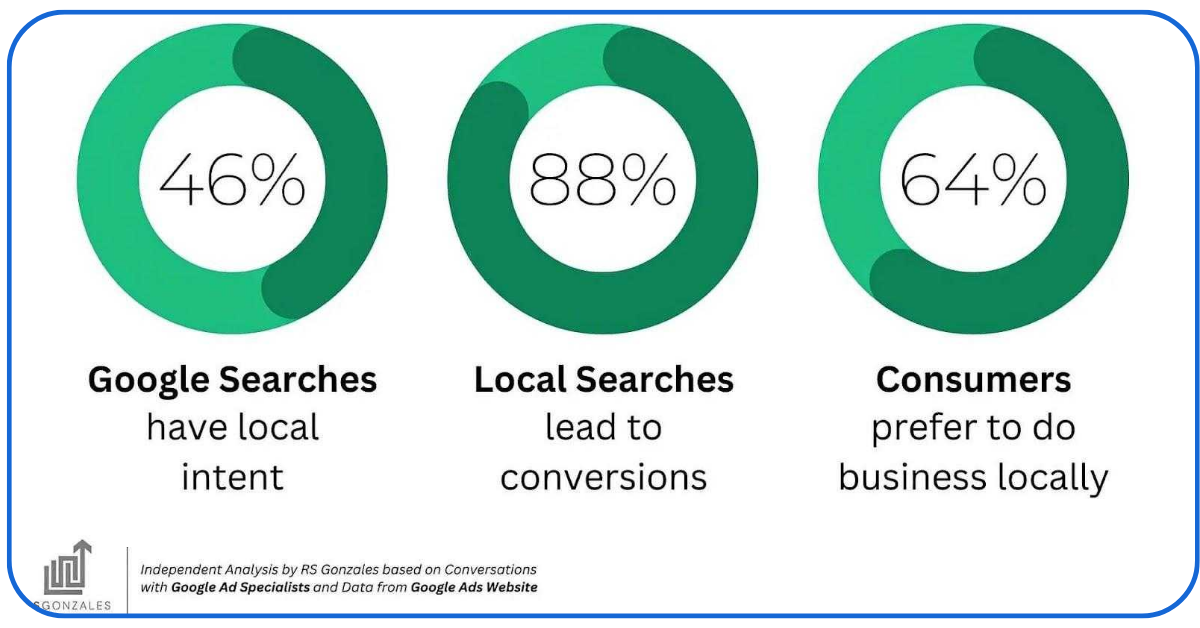
Nearly 46% of all Google searches have a local intent — users are looking for products and services near them.
That means almost half of your potential audience sees results that depend not on the quality of your website, but on where they are physically located.
Your site might rank first in Warsaw — yet fail to appear in the top 10 in Prague or Berlin.
For local businesses, that’s a matter of survival: if you’re invisible in local search results, customers simply won’t find you.
Imagine you manage a small coffee chain. When you search for “coffee near me” from your office, your café shows up first.
But a person just two blocks away sees something completely different — your competitor appears higher thanks to local reviews and Google Maps visibility.
You might think everything is fine — but in reality, you’re losing potential customers every single day.
Here are the numbers: 88% of local searches lead to a conversion — a call, a visit, or a purchase within 24 hours.
If your business doesn’t appear in local search results, you’re literally missing out on people who are ready to act right now.
Even major brands face this issue.
64% of consumers prefer to engage with companies that have a local presence.
If you’re not visible at the city or neighborhood level, a competitor who has optimized for local visibility will simply capture that demand.
When a company ignores the differences between local and national search results, its analytics, content strategy, and ad performance all suffer.
Wrong conclusions lead to wrong decisions, while those who monitor the local SERP gain an advantage almost effortlessly.
All of this raises a crucial question: how different is the local search from the national one?
Many marketers assume the difference between national and local search is just a few links or the appearance of a Google Maps block.
In reality, the differences go much deeper — they affect everything from result structure to click-through rates and overall brand visibility.
Let’s break down five critical differences between national and local SERPs that directly determine how users find — or fail to find — your business.
5 Key Differences Between National and Local SERPs
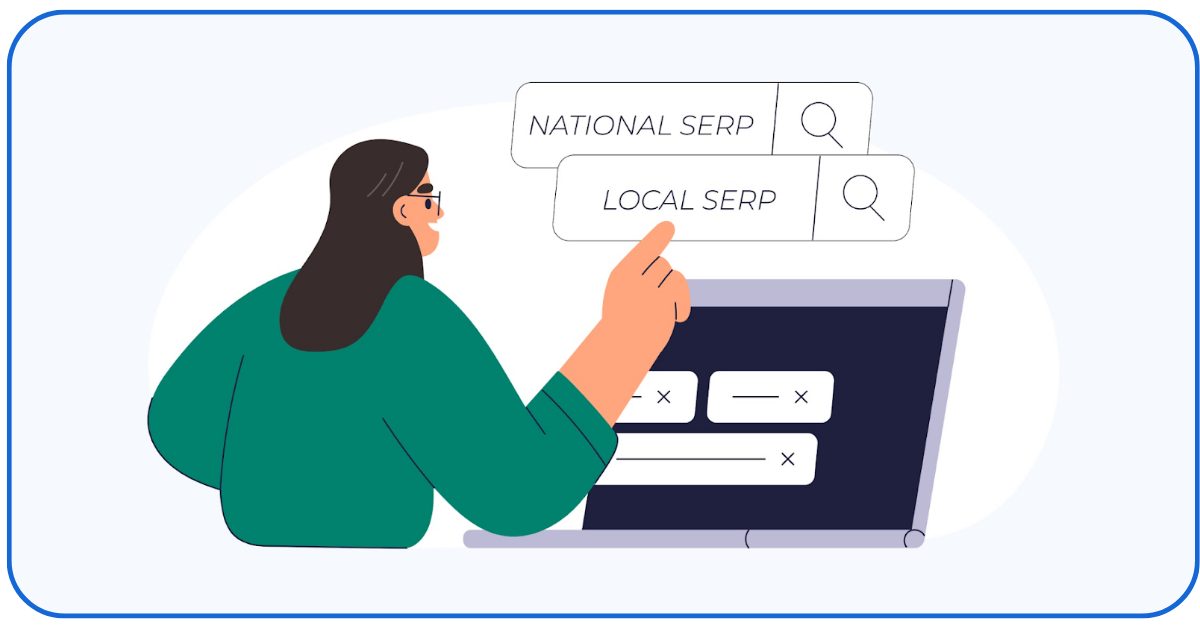
1. Different results — even for the same query
Google tailors search results based on the user’s location.
A query like “dentist near me” in Berlin and in Munich will bring up completely different websites — even if the keywords and language are identical.
🔍 Without checking from other locations, you’re not seeing the “real” ranking — only your localized version of the SERP.
2. Maps and Local Packs completely change visibility
In local search results, Google displays special blocks with maps, ratings, and business addresses.
National results don’t include these, which means that a company not optimized for Google Business Profile simply disappears from view.
📍 This is especially critical for cafés, shops, salons, and service providers that rely on customers within a 5-kilometer radius.
3. Different intents and types of snippets
In local search results, users see buttons like “Call Now,” “Directions,” or “Open Now,” while national results highlight reviews, videos, and articles.
Content written without accounting for this context loses both clicks and conversions.
4. Ads and CTR depend on the region
Google Ads adjusts ad placement based on location.
A customer in Warsaw might see your competitor’s banner, while you may have no idea those ads even appear.
📈 This makes comparing campaigns using a single version of the SERP meaningless — you need to view results from multiple points on the map.
5. Mobile and language factors amplify the differences
Users with an iPhone in Poland and those with an Android device in the Czech Republic can get completely different results, even with the same IP region.
Add language settings and cookie history — and you realize that the idea of a single, “universal” search result no longer exists.
That’s why professionals no longer rely on what they see in their own browser.
How to Avoid the “Own SERP” Trap: Top 3 Tools
Realizing that you’re only seeing your version of Google’s results is the first step. The next step is to view Google the way your customers do. Below are three tools that can help you do exactly that.
1. iSearchFrom
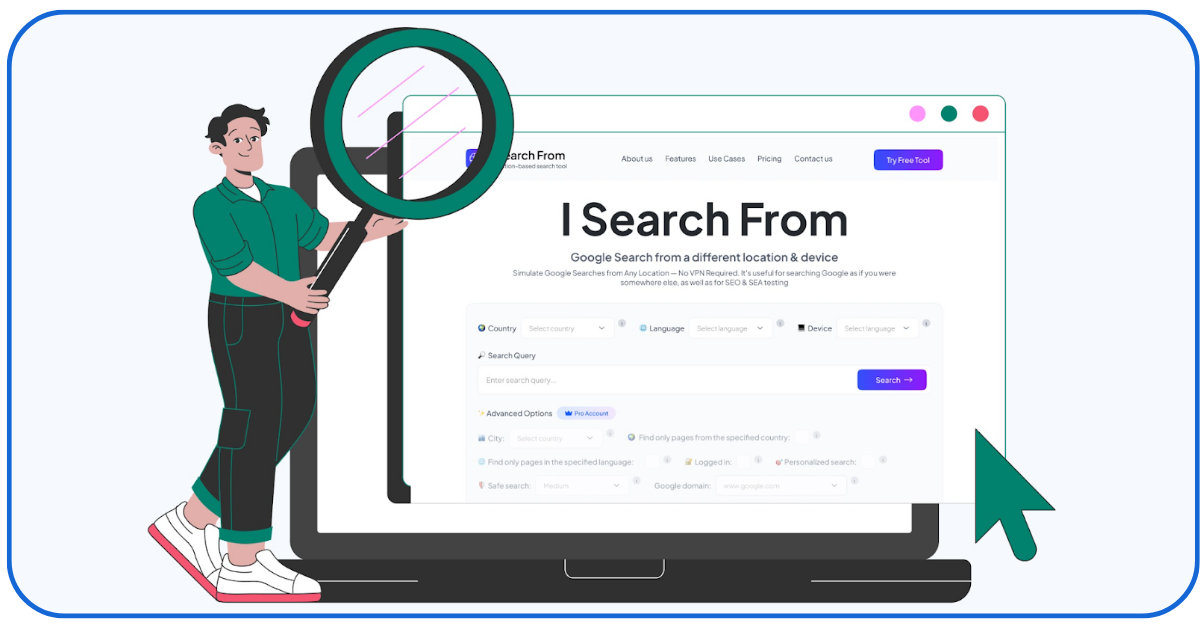
A simple and intuitive tool designed specifically for testing Google search results from different locations.
It allows you to choose the country, city, language, device (desktop or mobile), Safe Search level, and even the Google domain type — for example, .com, .de, or .pl.
Unlike a VPN, iSearchFrom doesn’t change your IP address; it directly simulates a search query as if it were performed from the selected region.
This means the search results you see are as close as possible to what a real user would see — without extra distortion or personalization.
The tool is useful for:
- checking website rankings across different countries and cities;
- analyzing how ads and content appear on mobile and desktop devices;
- comparing brand visibility across various interface languages.
2. SE Ranking
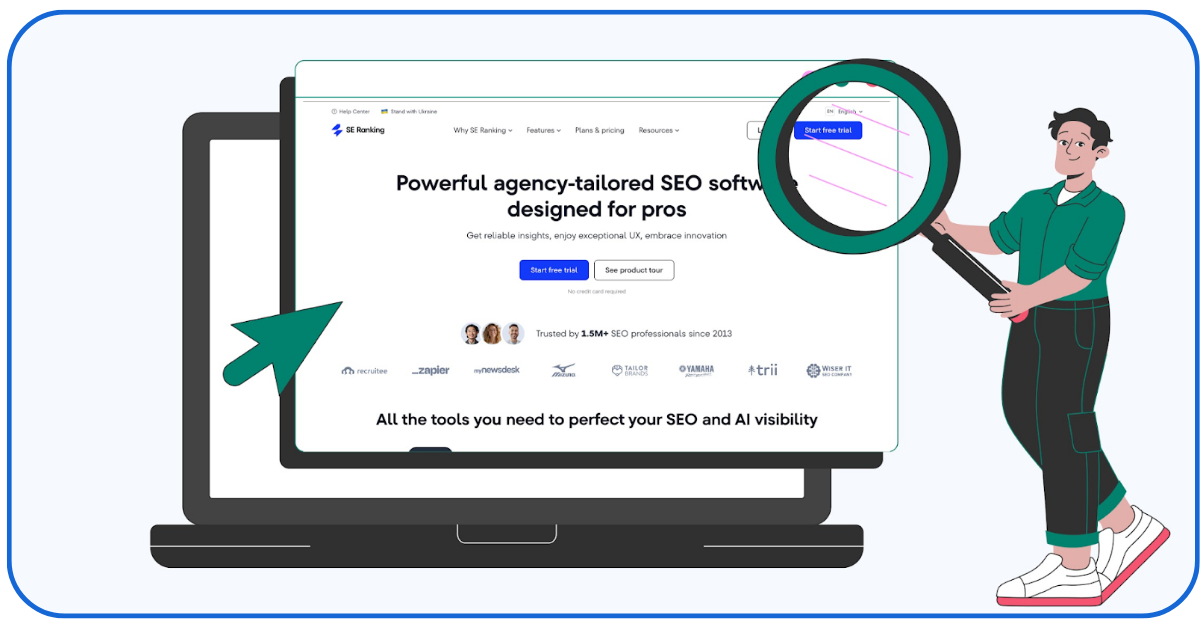
An advanced solution for professionals.
It not only lets you view search results from different locations but also tracks position changes, competitors, and keywords over time.
Ideal for agencies and SEO specialists managing multiple regions at once.
3. BrightLocal
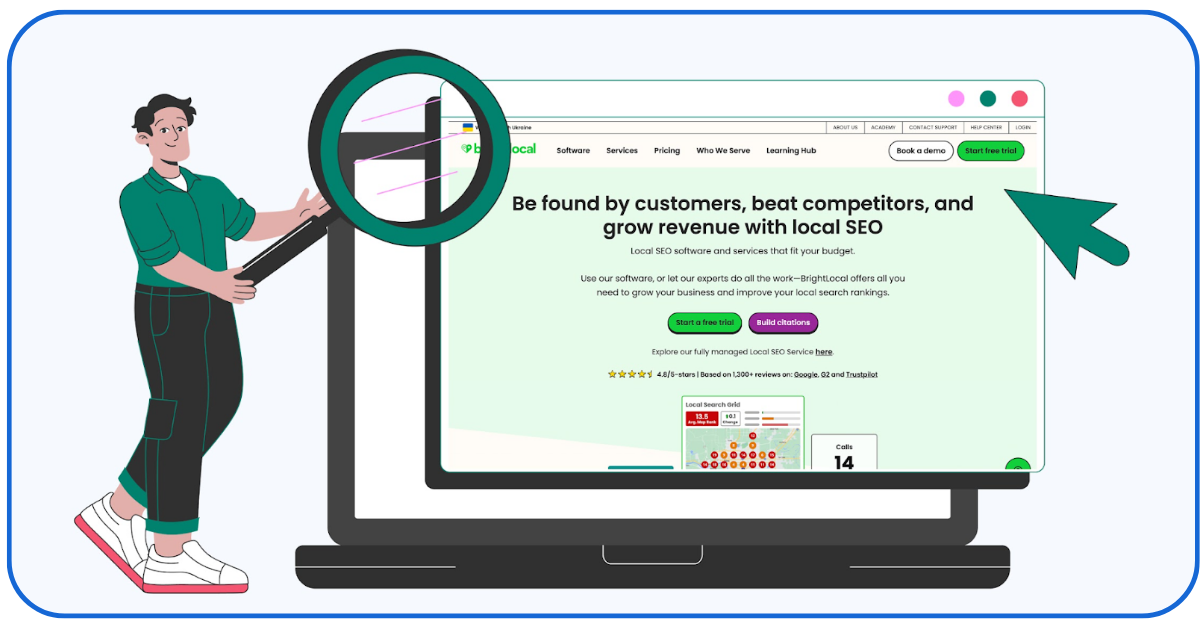
A tool built for local SEO analysis.
It helps you check Google Maps results and Local Pack listings for specific cities — even down to postal codes.
Perfect for businesses with physical locations such as cafes, salons, shops, and service providers.
There’s no single Google anymore.
Every city, every device, every user sees a different world — and knowing that difference is your competitive edge.
About author:
Stacy S. is a Marketing Officer at iSearchFrom, where she helps brands understand how their customers actually see Google. She focuses on real user search behavior and works with businesses to turn those insights into smarter, more effective marketing decisions.
Read More:
Top SEO Link-Building Best Practices and Strategies- 11 Best Ways to Rank Higher in SERPs