
Before diving into strategy, it helps to get clear on the basics. What is Answer Engine Optimization? Honestly, the search does not look like it did five years ago. People are not typing two-word phrases into Google and clicking through pages of results anymore. They are having full conversations with AI tools, asking complete questions and expecting a straight answer on the spot.
That behavioural shift is exactly what makes Answer Engine Optimization (AEO) one of the most important things a brand can invest in right now. Organic search traffic is expected to fall by 25% by 2026 as AI-generated responses replace traditional search results. That is not a small dip; that is a fundamental change in how visibility works online.
If your content is not structured to be picked up by AI-powered platforms, it simply will not show up. Full stop.
So What Exactly Is Answer Engine Optimization
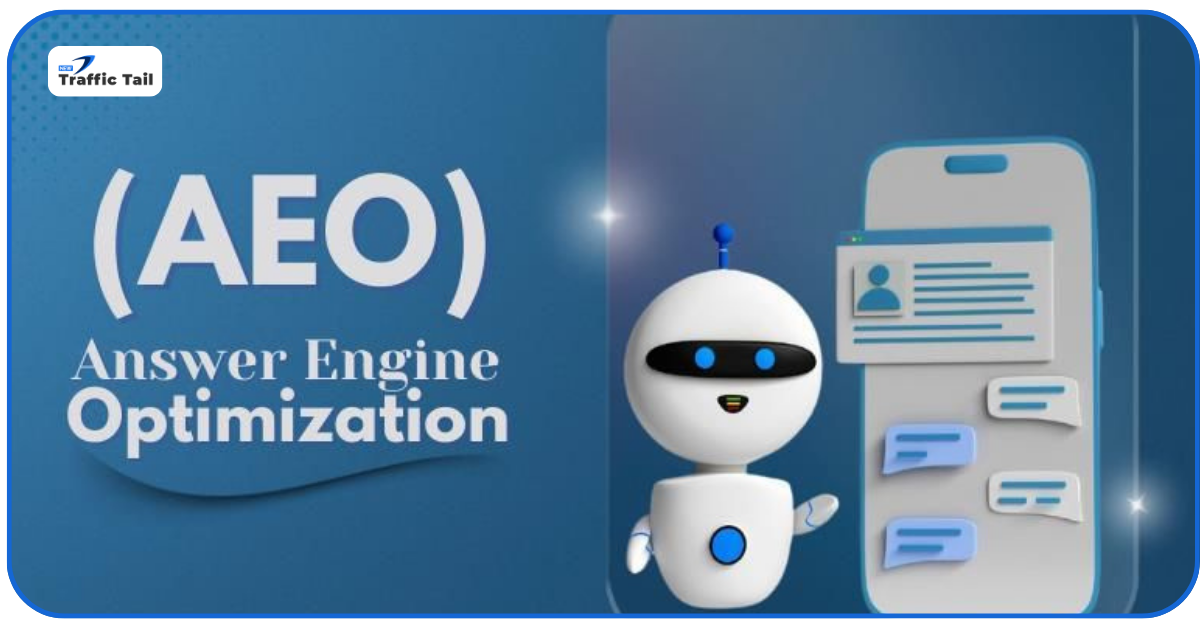
At its core, Answer Engine Optimization is about making your content the source that AI tools trust and reference when someone asks a relevant question. Think Google
AI Overviews, Perplexity, ChatGPT Search, Bing Copilot; these platforms do not show a list of links. They give one answer, sometimes two.
It is completely different from SEO:
SEO has always been about:
● Climbing the rankings on search engine results pages
● Getting users to click through to your site
● Building backlinks and chasing domain authority
● Optimising around high-volume keyword phrases
Answer Engine Optimization is about:
● Being the cited source inside an AI-generated response
● Writing content that machines can extract clear meaning from
● Targeting how people actually phrase questions in conversation
● Earning genuine topical authority in your niche
One is about getting the click. The other is about being the trusted answer, whether the click happens or not.
How These AI Platforms Actually Choose Their Sources
This is the part most people skip over, and it is worth understanding properly. AI answer engines are not randomly pulling content from the web. There is real logic behind what gets surfaced and what gets ignored.
These platforms lean heavily on three things:
● Natural language processing to understand the actual intent behind a question, not just the words used
● Entity recognition to map your content to specific topics, people, places, and concepts
● Structured data to confirm what your page is actually about, in a language that machines read fluently
Content that is vague, poorly organised, or thin on credibility simply does not make the cut. Answer Engine Optimization exists to close that gap and give AI tools a genuine reason to choose your content over someone else’s.
Why This Should Be a Real Business Priority Right Now
The Zero-Click Reality Is Not Going Away
More than 65% of searches now end without a single click to any website. That number has been climbing steadily and shows no sign of reversing. For businesses that have built their entire digital strategy around driving website traffic, that is a
serious problem worth paying attention to.
The opportunity within that challenge is this: when an AI platform cites your content as the answer, your brand still earns visibility. You get the authority, the brand recognition, and the trust signal even without the visit. That is what a smart Answer
Engine Optimization actually delivers.
Voice Search Changed the Rules on Language
Voice queries are a completely different beast from typed searches. Nobody speaks the way old-school keyword research assumed they did. They ask long, specific, natural questions, and AI tools are built to match those conversational patterns.
Your content needs to reflect real human language, not keyword-stuffed sentences written for an algorithm from 2015.
Practically, that means writing content that:
● Opens each section with a direct, clear answer
● Uses the same language your audience uses day to day
● Avoids padding sentences that exist just to fill space
● Mirrors the structure of a genuine question and answer
Building an SEO Strategy That Actually Works
Get Your Schema Markup in Order
A schema is how you communicate with AI at a structural level. It removes ambiguity and tells platforms exactly what your content covers. Without it, machines have to interpret your content themselves, and they often get it wrong.
The schema types worth prioritising:
● FAQPage for Q&A-style content
● How-to for instructional and step-by-step guides
● Article for editorial and thought leadership pieces
● Organization for building brand-level trust signals
● LocalBusiness if geography is relevant to what you do
Format Content for Both Humans and Machines
Good Answer Engine Optimization is not just a technical exercise. The way you write still matters enormously. Short paragraphs. Specific headers framed as questions. Direct answers are delivered upfront rather than after three paragraphs of preamble.
Every section of your content should be able to stand alone as a clean answer to a specific question. If it cannot, it probably needs to be rewritten.
A simple formatting checklist worth following:
● Keep paragraphs tight; two to three sentences maximum
● Lead with the answer, then expand with supporting detail
● Use bullet points for comparisons, features, and lists
● Write H2S and H3S as the questions your audience is genuinely asking
Build Real Topical Authority
AI platforms favour sources that demonstrate genuine depth on a subject. One good article will not cut it. A content strategy built around clusters of related, well- researched pieces of signals to AI tools that your brand genuinely knows its space.
Pair that with strong E-E-A-T signals, real author credentials, external citations, mentions from credible publications, and your content becomes significantly harder to overlook.
Tangible Steps You Can Take This Week
No need to rebuild everything overnight. Start here:
● Rewrite your top five pages so each section opens with a direct answer
● Add the FAQ schema to every core service or product page
● Turn your existing H2S into full questions that your audience searches
● Use Google’s Structured Data Markup Helper to implement schema without heavy dev work
● Identify People Also Ask questions in your niche and create content that answers them precisely
● Begin building external authority through guest contributions and genuine PR mentions
About C2C Media
C2C Media is a digital marketing agency focused on helping brands grow their online presence with strategies that actually hold up over time. The team operates across content, search, and digital strategy, blending creative thinking with technical delivery for businesses that want results, not fluff.
With AI changing the way audiences find brands, C2C Media helps clients adapt their approach and stay truly visible in a more competitive digital world. If your content strategy needs sharper direction heading into this next phase of search, they
are worth a conversation.
Read More:
How AI-Powered Brand Asset Management Works in Modern Organizations
The Bottom Line
Answer Engine Optimization is not something to add to next year's roadmap. These are the brands that will own visibility in 2026 and beyond. Start with your existing content, restructure it, add in the schema, and write like a human who is answering a question.
That is what AI is looking for. That is what your audience deserves too.