
If someone asked you, “What are the best AI search monitoring tools?” your first instinct will probably be to open ChatGPT or Google’s AI mode and just repeat that question. That’s how most people look up and compare products, brands, and general topics today.
For your business, this clearly means your brand’s name MUST appear in these AI answers whenever relevant questions are asked by potential customers.
So, how can you find out if your brand name shows up when people ask ChatGPT, Claude, or Perplexity things like ‘Who are the best cleaners near me’ or ‘Best accounting SaaS tool for small start-up?’
By using the best AI visibility tools.
These tools don’t just track IF the top AI models mention your brand. They also track HOW FREQUENTLY your brand appears in their answers, whether your website is linked with the answers, which competitors are mentioned, and how your brand’s overall AI visibility evolves over time.
So, consistently tracking and optimizing your brand’s overall AI visibility by using the insights these tools provide is very important. We’ll review the 10 best AI search monitoring tools out there today.
What is AI Search Monitoring?
If you run a cleaning business, it’ll appear on Gemini, ChatGPT, Claude, or Perplexity’s answers when people ask questions like, ‘Cleaning business near me?’ only if your business has a:
- Functioning website with structured business data
- Up-to-date product/service information
- Genuine user reviews on different platforms
AI tools will look at all of that data to determine if your business is good enough to be mentioned in their results. So, while classic SEO-based discovery happens when a site has the right keywords, backlinks, and domain authority, AI discovery is all about the brand’s overall credibility online.
If you’re keeping your site’s schema up-to-date, earning decent press coverage, and publishing high-quality content, you deserve to know whether AI engines are acknowledging all of that work.
That’s what the best AI search monitoring tools do — they run real user prompts on live AI engines and track:
- Mentions: Do the main AI engines mention your brand name in answers to relevant questions from your target customers?
- Citations: Does the AI link back to your site’s content as a source whenever relevant questions are asked?
- Sentiment: Do their answers (whenever your brand is mentioned) paint your brand in a positive, neutral, or negative light?
- Overall Visibility: Which AI engines do and don’t mention your brand name?
- Evolving AI Presence: How is your brand’s presence on different AI platforms evolving over time?
AI search optimization tools go even further and will share insights on how to improve every aspect of your brand’s overall AI visibility.
Why Spend Money on AI Search Monitoring Tools?
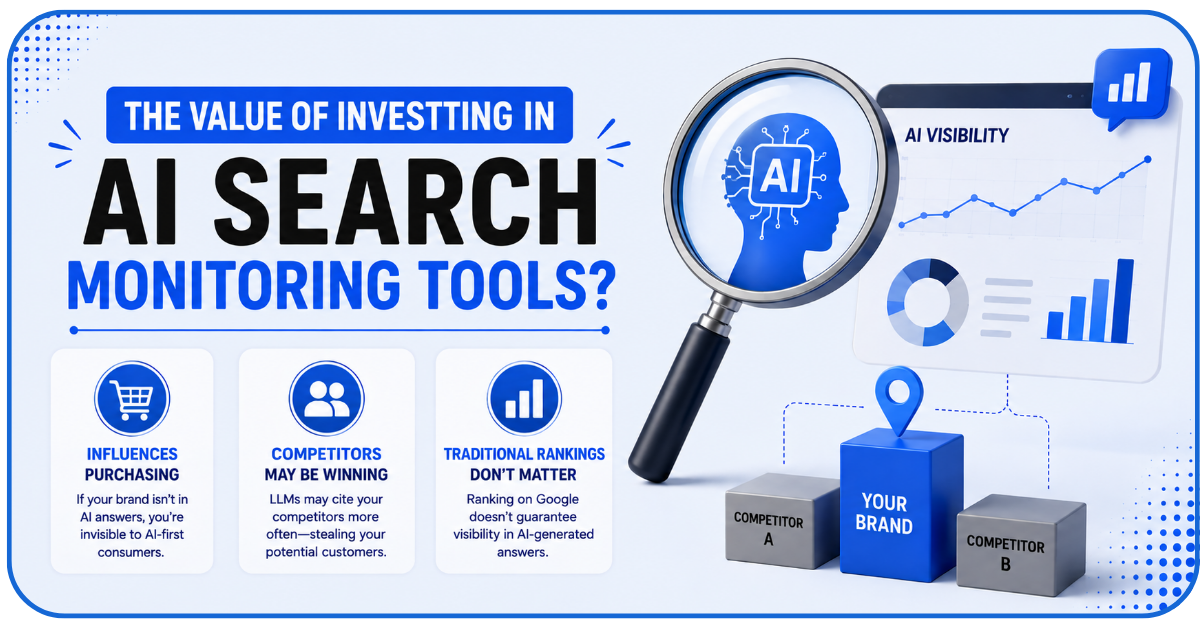
AI search monitoring is still a niche practice. Brands that optimize for it early will have a huge ‘early-mover’ advantage, right before 2028 – the year AI traffic is expected to surpass traditional search traffic. Using these tools is also important because:
- AI search influences purchasing behaviour: If your brand name doesn’t show up in AI answers – it’ll be invisible to AI-first consumers (a growing community)
- Competitors may be in answers: If LLMs consistently cite your competitors more than your brand, and you do nothing about it, you lose a big chunk of your potential buyer base
- Traditional rankings don’t reflect AI visibility: Being top 10 on Google’s search results has no correlation with being mentioned by the top AI engines
- AI answers are non-deterministic: The same prompt/query run twice can yield different answers – unless you use tools that consistently measure your presence – there’s no guaranteed visibility
- Monitoring can inform your content strategy: If specific queries related to your brand constantly cite your competitors’ content, you’ll know what type of content to produce to earn those citations
The 10 Best AI Search Monitoring Tools You Should Consider Using
Here are the 10 best AI visibility tools reviewed on the basis of their strengths, weaknesses, who they’re built for, and the genuine results you can get from using them.
| Tool | Tracks | Standout Features | G2 Rating | Pricing | Limitations | Best for |
| Profound | ChatGPT, Perplexity, Claude, Gemini, Copilot, Grok, and Google AI Overviews | Provides data on mentions, citations, sentiments, and on consumers’ AI search trends – grouped by demographics | 4.5/5 | $99/month (single engine-tracking); $399+/month for meaningful multi-engine coverage | Steep learning curve – takes time to decipher Profound’s dense and technical dashboards; Expensive – not ideal for smaller businesses | Enterprise teams with dedicated analysts |
| Peec AI | ChatGPT, Perplexity, Gemini, Google AI Overviews | Can track multiple brands via one account, automated sentiment analysis | 4.8/5 | $95-$100/month entry point; costs increase as you track more prompts across more engines | Tracks AI visibility well but doesn’t offer any insights on how to improve it; doesn’t track Claude, Grok, DeepSeek, or Kimi | Mid-market marketing teams and multi-client agencies |
| Otterly.AI | 6 AI engines, including ChatGPT, Perplexity, Google AI Overviews, Gemini, Copilot, and Google AI Mode | 50+ country support, unlimited team seats, Claude Skill integration (for custom reporting), a built-in GEO audit tool, and a live MCP server for developers | 4.7/5 | $29/month (Lite, 15 prompts) to $189/month (Standard); Gemini and Google AI mode tracking come with paid add-ons | No traffic attribution – no details about the users behind the prompts; add-ons for Gemini and AI Mode may inflate costs quickly; pro teams will outgrow the entry tier quickly | Solo founders, startups, lean agencies running pilot AI search tracking programs |
| Ahrefs Brand Radar | Google AI Overviews, ChatGPT, Perplexity, Gemini, Grok (no Claude) | Easy-to-use, 350M+ prompt database – the largest retroactive index in the category; its integrated dashboards also share traditional keyword and backlink data | 4.5/5 (overall rating for Ahrefs – not just this tool) | Base Ahrefs subscription ($129+/month) + $199/month per AI engine | Penchant for inaccurate results, outdated tracking methodology, not the best tool for marketers not already using Ahrefs | Existing Ahrefs power users doing macro-level competitive research |
| Semrush AI Visibility Toolkit | ChatGPT, Google AI Overviews, Gemini (no Claude or Perplexity) | Polished reporting, 239-million-prompt index, native integration with legacy SEO workflows, clean AI Visibility Score built for leadership presentations | 4.4/5 | Base Semrush subscription ($139/month) + ~$99/month per tracked domain | Narrow engine coverage, strong on monitoring, weak on prescriptive optimization | In-house marketing teams already familiar with the Semrush ecosystem |
| Scrunch AI | ChatGPT, Perplexity, Gemini, Claude, Google AI Mode, Google AI Overviews, Copilot, Grok, Meta AI | AXP reformats site HTML for AI crawlers, Influence Score for easy competitive benchmarking, GA4 and Cloudflare log integration | 4.6/5 | $250-$417/month on annual contracts | Too expensive for smaller teams; its macro-level insights can lack hyper-specific content direction or be too broad for niche industries | Enterprise technical SEOs and Sitecore users (it was acquired by Sitecore in June 2026) |
| Rankability AI Analyzer | 11+ engines including ChatGPT, Gemini, Google AI Overviews | Real-time Content Optimizers, white-label reporting included, unlimited client seats, proprietary ‘Rankability’ scores | 5/5 | $79/month (must sign annual contract), add-ons for content insights | A newer and less granular tool than dedicated AEO tools; its credit-based AI content insights can complicate budgeting | SEO professionals and content agencies wanting one consolidated stack |
| LLMrefs | 11+ engines including ChatGPT, Claude, Perplexity, Gemini, Grok, Meta AI, DeepSeek, Copilot | Automatic prompt/query fan-out, llms.txt file generator, Reddit thread discovery, transparent flat pricing | NA | $79/month | Weekly (not daily like most tools here) data refresh; no GA4 integration or traffic attribution; offers little guidance on improving AI visibility | Multi-client agencies and lean teams needing maximum breadth on a budget |
| AthenaHQ | 8+ major platforms | Olympus Dashboard GEO score, Shopify and GA4 integration (to tie AI visibility with sales data), automated citation outreach | 4.9/5 | $295-$900/month (credit-based) | Unpredictable costs at scale; best features locked behind enterprise tiers; not for budget-conscious businesses | Well-funded growth-focused teams, top eCommerce brands |
| Analyze AI | ChatGPT, Perplexity, Claude, Gemini, Copilot, and Google AI Mode | GA4 integration, prompt-level performance mapping, competitive benchmarking tied to your site’s revenue metrics | NA | Only available on request | Narrower engine coverage than LLMrefs; newer player with less historical validation | Data-driven marketing leaders who must prove the ROI of their AI search optimization efforts |
-
Profound
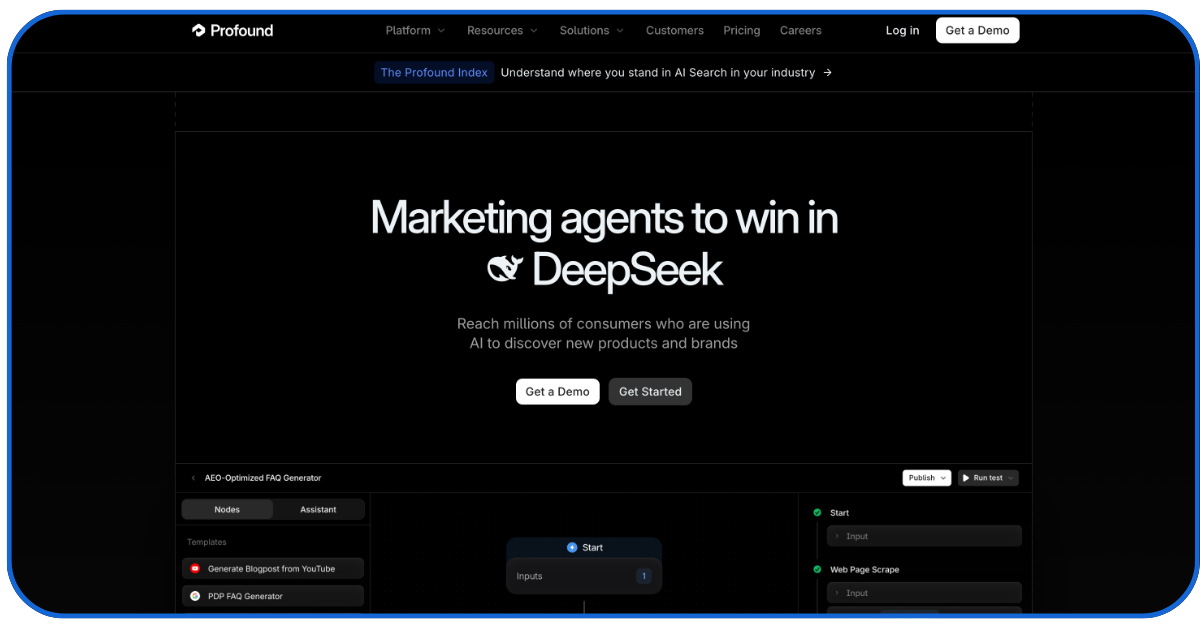
All the big companies wanting to dominate the AI search landscape either use Profound or work with marketing agencies that use it. It can track brand visibility across 7+ major AI engines. Profound also reports which AI prompts a brand’s target users are looking up most frequently.
So, apart from being the most mature AI search monitoring tool, it’s also one of the best AI search optimization tools because you can use the Prompt Volumes data to create the kind of website content users are searching for on AI engines – and earn even more traffic and credibility.
-
Peec AI
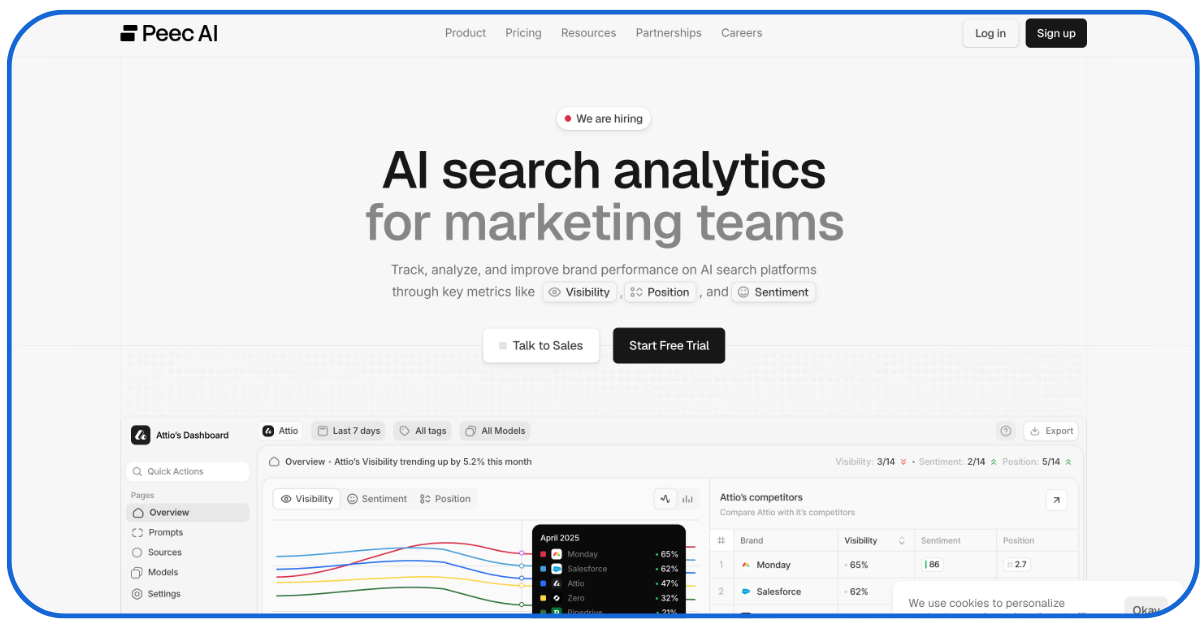
Don’t like Profound’s dense dashboards? You’ll love Peec AI’s clean, bloat-free user interface.
It’s very easy to see exactly where and how frequently your brand is being mentioned by 3 major AI engines on this tool. You’ll also see whether the mentions are positive.;
Its pricing is also small-business-friendlier than Profound.
-
Otterly.AI
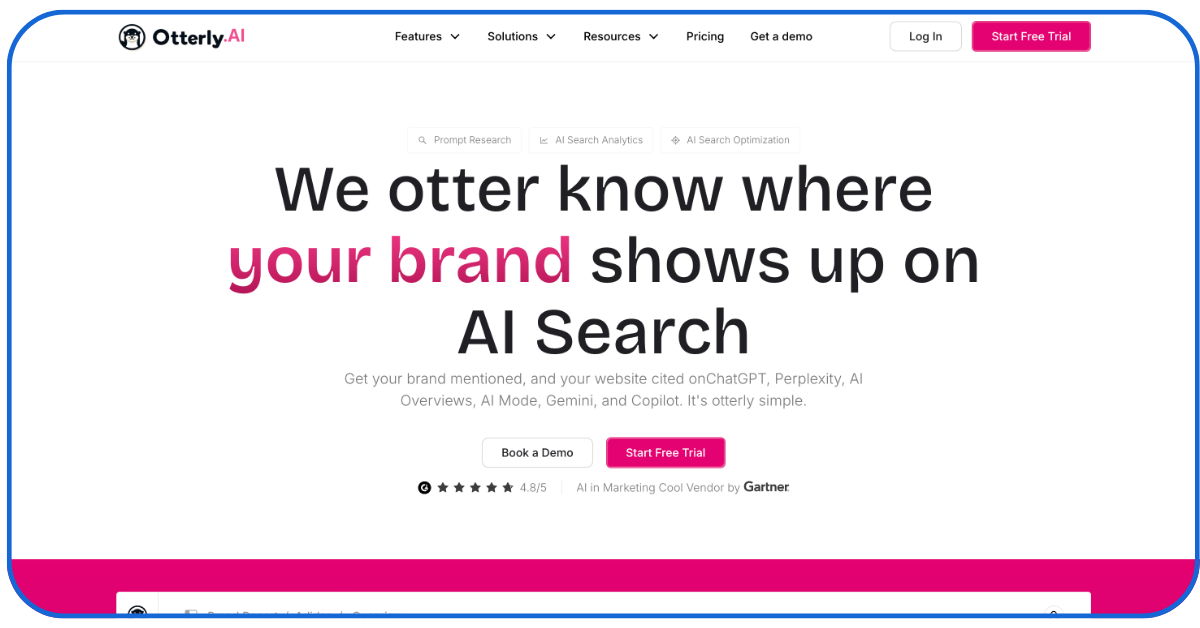
Otterly.AI is the entry-level AI search monitoring champion. Designed for solo founders and lean teams who need immediate signal detection, it feels fast and frictionless from the first login. It tracks mentions, competitive positioning, and citation frequencies across multiple engines at a low cost.
-
Ahrefs Brand Radar
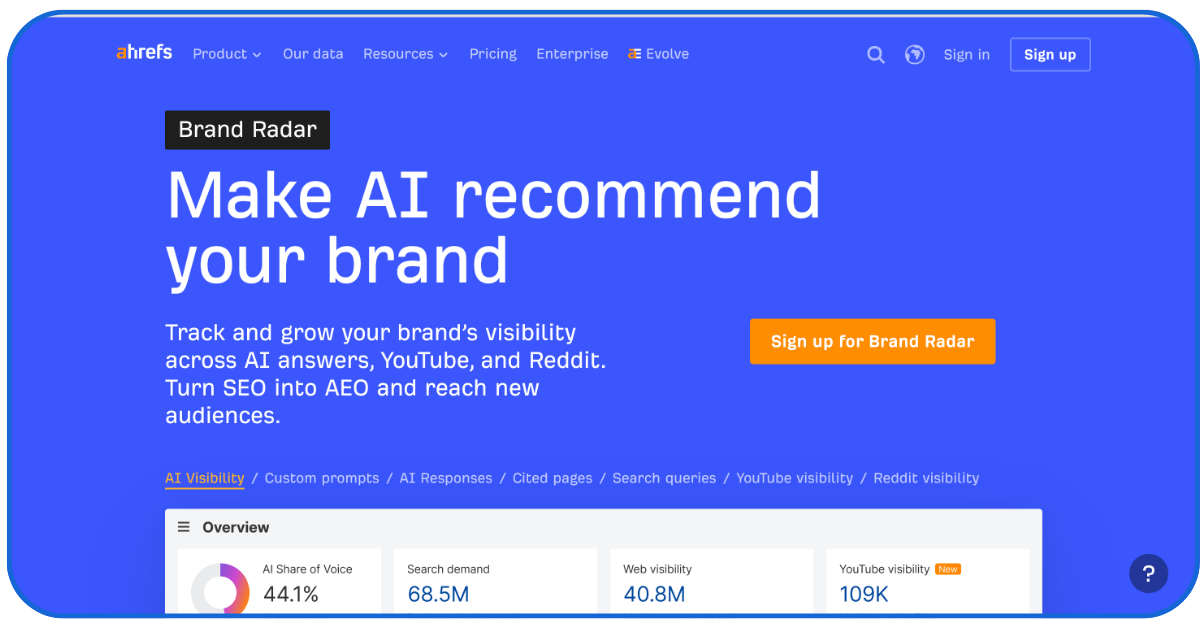
Already using Ahrefs’ SEO tools? Then, you’ll have no trouble using this adjacent tool. You’ll find your brand’s AI visibility stats right next to its keyword- and backlink-related metrics. This tool will track your brand’s presence across its 350+ million AI prompt database — in seconds.
But it can’t carry out live natural-language prompt research like some of the more advanced tools on this list. It can only cross-reference your brand’s name against its existing database.
That’s why this tool has a few accuracy issues – especially with tracking ChatGPT, which undergoes routine data updates. It fares much better when tracking brands on Google’s AI engines.
-
Semrush AI Visibility Toolkit
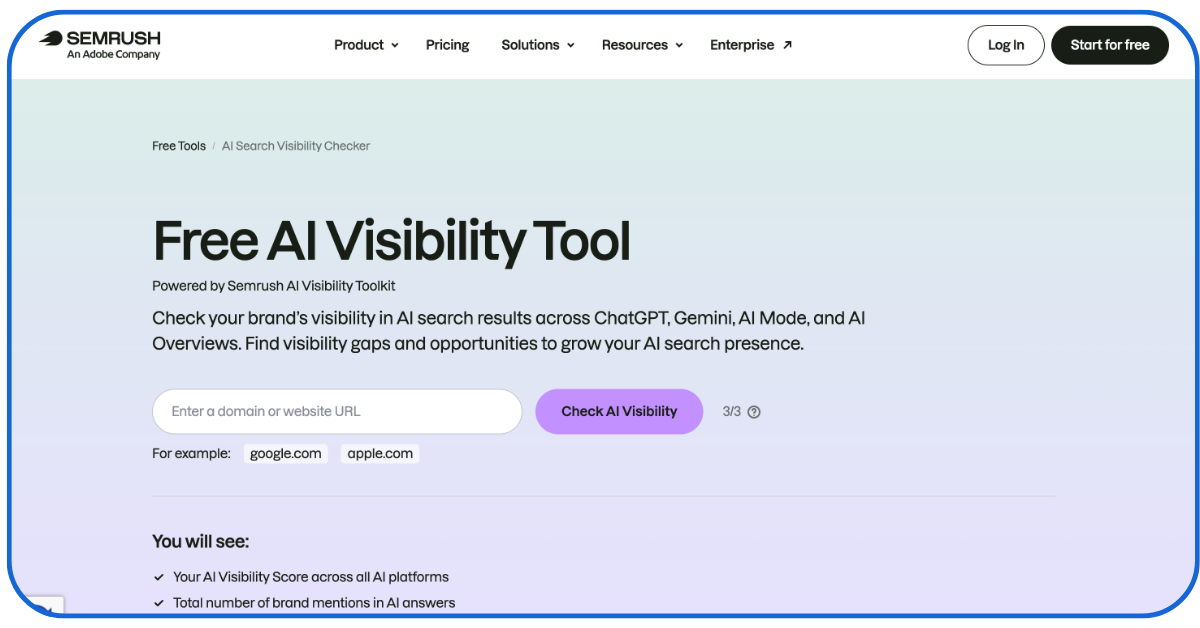
Semrush is one of the best AI search monitoring tools if you need simple, boardroom-ready visuals. It shares simple ‘AI Visibility Scores’ that executives can instantly understand.
It tracks brand perception and mention frequency across an index of over 239 million prompts. Existing Semrush users consistently say it’s the best integrated add-on for their stack.
-
Scrunch AI
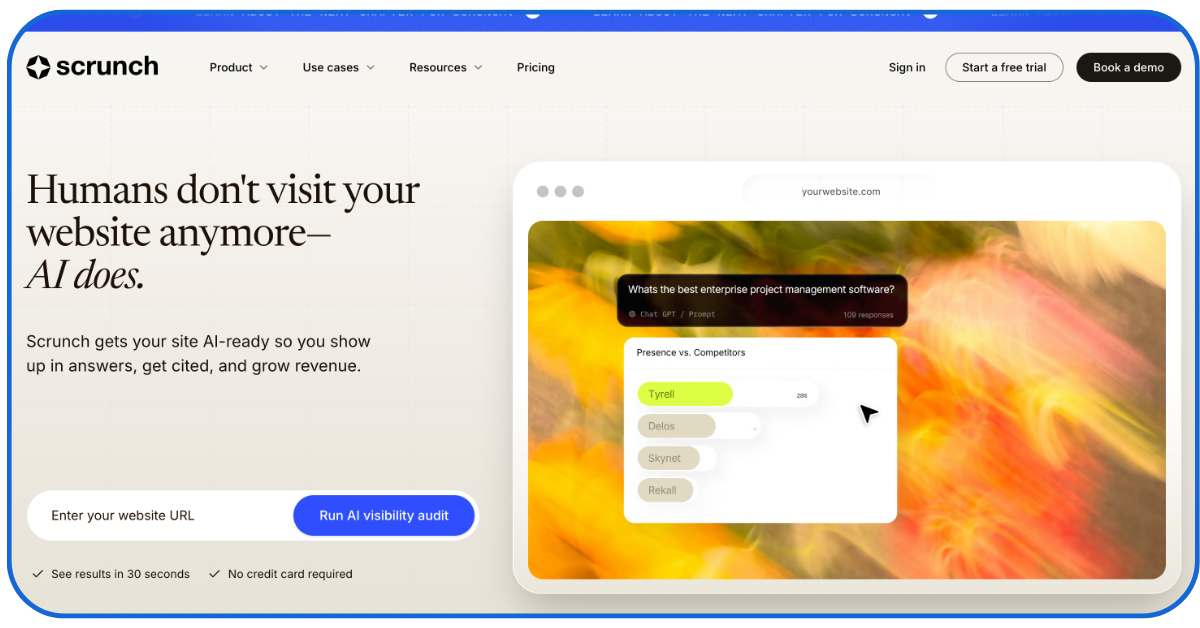
Scrunch AI tracks AI visibility across 9 AI engines and gives ‘Influence Scores’ based on how well-positioned a brand is on the major LLMs. It also has an ‘Agent Experience Platform’ (AXP) feature that’ll reformat your website’s pages so that it gets ingested more effectively by LLM crawlers.
Sounds like the dream AI search optimization tool, right?
It is — but only for major enterprises, as it’s quite costly.
-
Rankability AI Analyzer
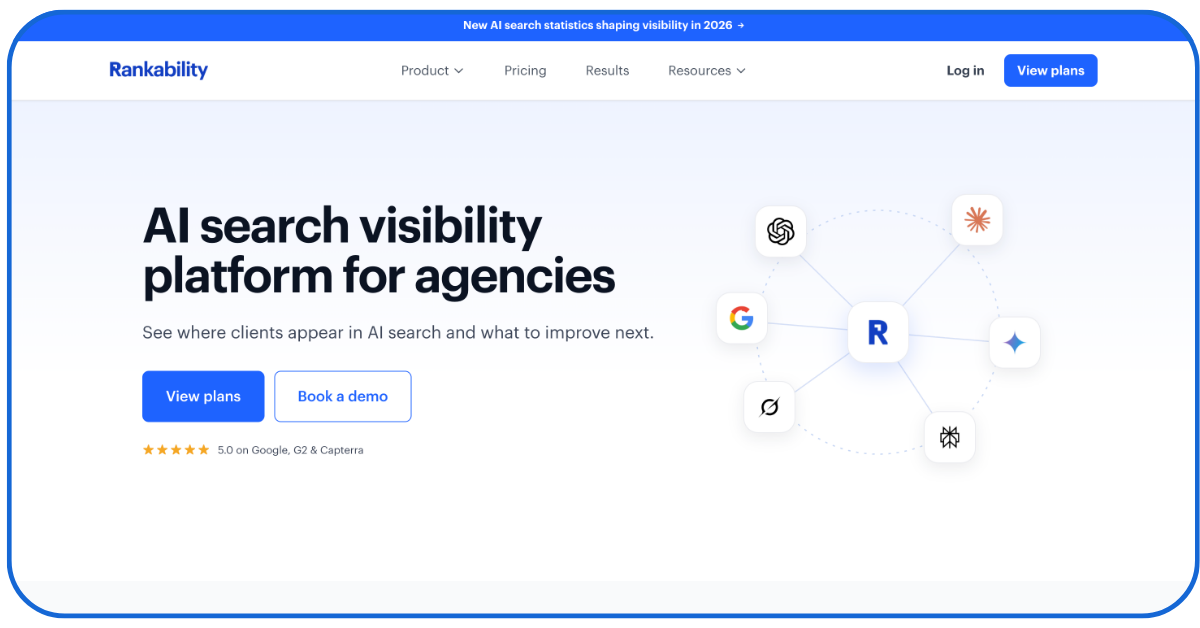
Rankability treats AI visibility as a natural extension of content optimization. Built by SEO veteran Nathan Gotch, it unifies keyword research and AI search tracking into one workflow.
It monitors brand presence across multiple AI engines and shares content optimization insights powered by Google NLP and IBM Watson.
Your brand’s AI visibility will also get proprietary ‘Rankability Scores.’
-
LLMrefs
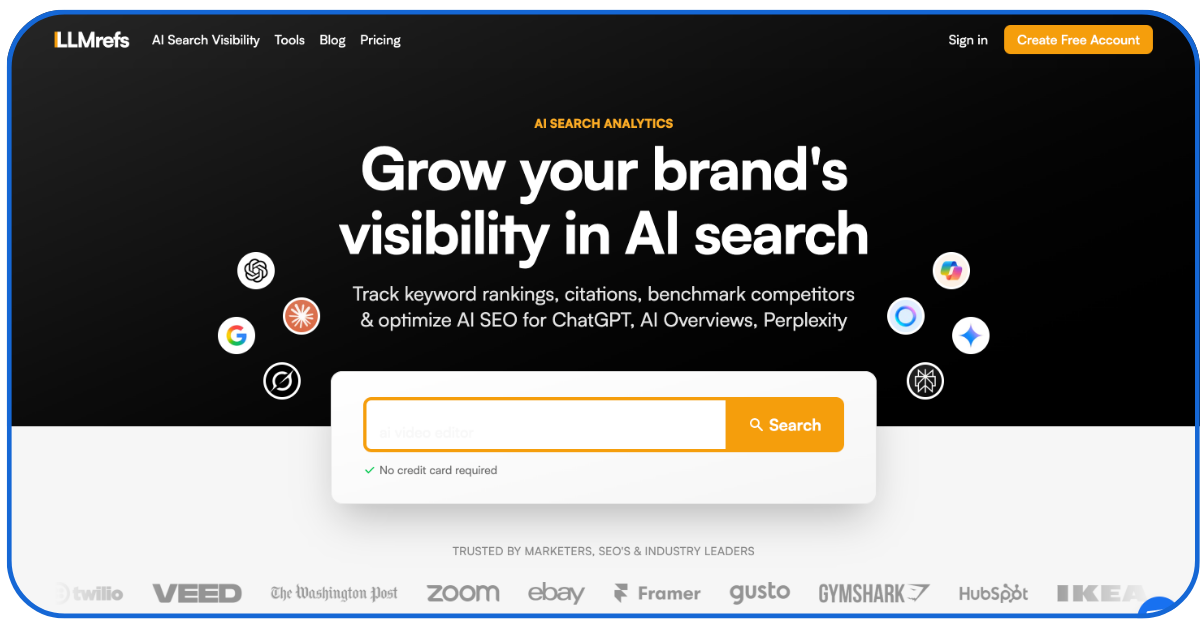
LLMrefs offers the broadest engine coverage for the money. For a flat $79/month fee, you get unlimited domains, unlimited seats, and tracking across 11+ engines.
It also has a lean, utilitarian interface and a ton of helpful optimization features like granular citation analysis, geo-targeting, a Reddit discovery tool, and an automated llms.txt generator.
-
AthenaHQ
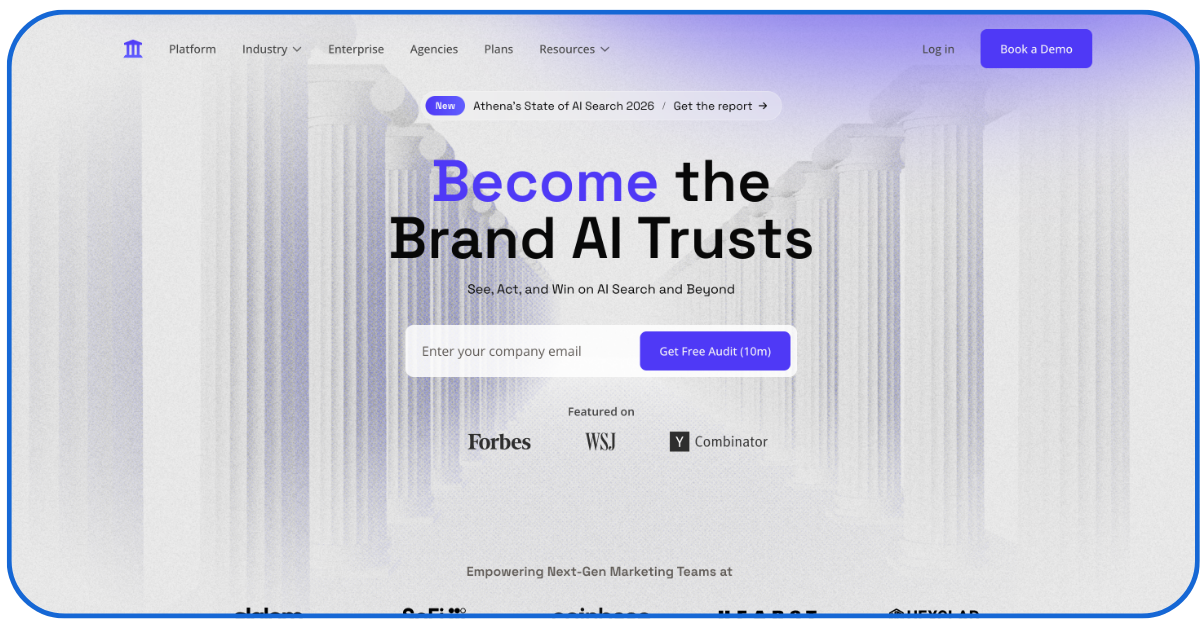
Backed by Y Combinator and founded by ex-Google engineers, AthenaHQ is less a tracker and more an optimizer. It combines multi-engine prompt research across 8+ AI engines with autonomous content agents that generate optimization recommendations.
Apart from telling you how to optimize your content for more effective LLM ingestion, it can also reach out to LLM-favoured domains via email to secure citations on your brand’s behalf.
-
Analyze AI
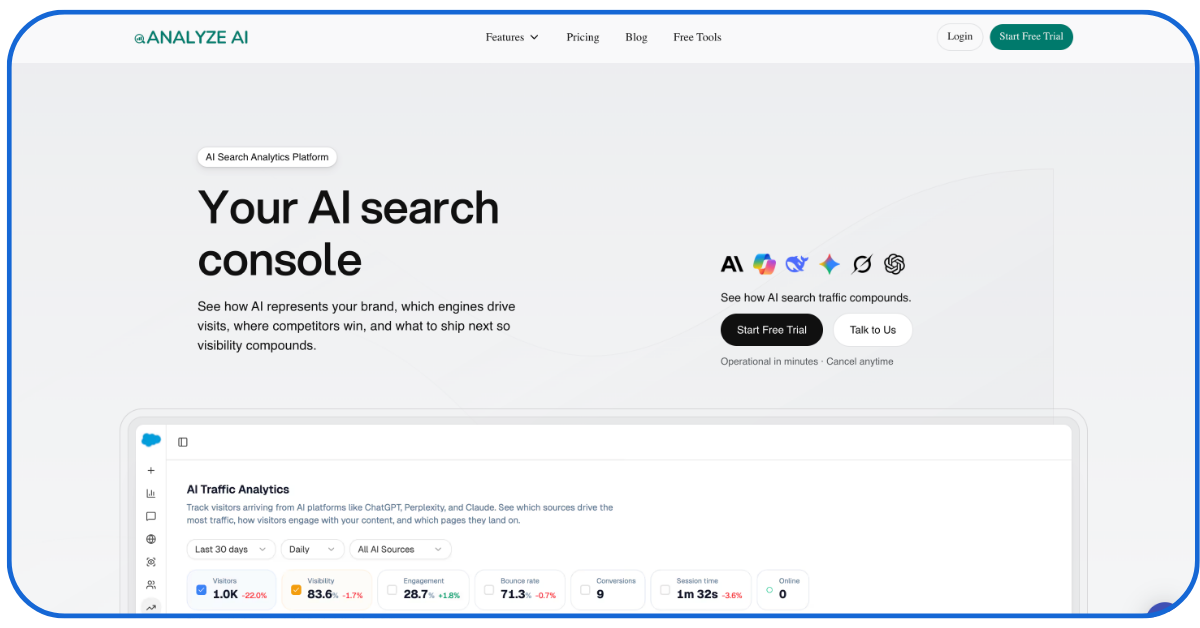
Analyze AI solves the attribution problem that so many of these best AI visibility tools have.
It tracks only 6 major engines but focuses relentlessly on what happens after the citation. It’ll show you how certain prompts and AI responses lead to on-site conversions.
You can use this data to optimize your site’s user journeys and conversion funnels.
AI Search Monitoring Tools vs AI Search Optimization Tools
Before we let you go, we’d like to clarify this difference:
AI search monitoring tools are diagnostic.
They’ll show you how visible your brand currently is, what sentiment surrounds it, and which sources get cited. But they won’t tell you what steps you need to take to boost your brand’s AI visibility.
Peec AI and LLMrefs are good examples of such tools.
AI search optimization tools do more than that.
They’ll track your brand’s AI visibility, but they’ll also:
- Suggest content rewrites to make it more LLM-friendly (like Profound)
- Brainstorm techniques to help you earn more citations on LLM-trusted domains (like AthenaHQ)
- Help you structure your site’s data for machine readability (like Scrunch AI)
- Recommend semantic improvements on your site to increase its chances of being retrieved by LLMs
These tools tend to cost more, but for brands that are struggling with AI visibility, they’re worth it.
Conclusion
Which of these tools piques your interest the most? If you ask us, you should start with the affordable Otterly.AI. Get a low-cost taste of what AI search monitoring is first.
Smaller SEO agencies managing multiple clients will also find LLMrefs’ flat pricing quite appealing.
For bigger brands with vaster tracking needs, Peec AI for its multi-brand handling, or Rankability for its unified tracking and content creation workflows, will be quite useful.
Of course, if you’re already paying for Semrush or Ahrefs, you can try out their AI trackers. But you won’t find their insights nearly as detailed as the premium tools like Profound or Scrunch AI.
Ultimately, there is not one or two tools we can definitively name when someone asks – What are the best AI search monitoring tools? All 10 of these tools are innovative and helpful, and the one/s that match your budget and commercial objectives are the best for you.
FAQs
Q1- Can AI search monitoring improve my website’s Google rankings?
Not directly because a site’s ranking and visibility in AI-generated answers are not correlated. But the content improvements you make based on AI monitoring (clearer entity definitions, stronger citations, etc.) will have strong positive effects on your site’s conventional SEO.
Q2- How often should a business check its AI search visibility?
Every day – because LLM responses change all the time. Ideally, your brand should be mentioned in relevant responses most of the time, and you need daily monitoring to ensure that.
Q3- Can the best AI search monitoring tools track local businesses?
Yes, you can ask tools to run queries like ‘best cleaners in location X’ and see which local brands the AI recommends. Coverage quality varies by platform, so verify if the tool you plan to use offers geo-targeting support before buying.
Q4- Do AI search monitoring tools replace Google Analytics and Search Console?
No, they’re not complementary. Search Console and GA4 data will track your brand’s visibility in Google Search results, whereas AI monitoring tools will track it on major AI engines.
Together, they’ll give you a complete picture of your discovery funnels.
Q5- Can the best AI search monitoring tools detect incorrect information about a brand?
Yes. Sentiment analysis and mention tracking will flag when an AI generates outdated facts, inconsistent descriptions, or flat-out hallucinations about your business.
Catch these early and make necessary corrections (or reach out to publishers sharing the false info) before the misinformation spreads.