

In our ever-changing society, casual street eats have been transformed into food trucks, generating handsome income for owners. Urban people want to experience outdoor cuisines because of their busy lifestyles. Therefore, the food truck market is growing worldwide day by day due to rising demand for diverse, affordable food items.
Furthermore, mobile dining systems offer flexibility and lower setup costs for businessmen than restaurants. As the popularity of street food increases, more people are wondering how to start a food truck business.
If you are also interested in the food service industry, this blog will describe every stage of setting up a food truck business plan. Additionally, you will learn about the marketing strategies to grow your business.
A Food Truck is Better Than a Traditional Restaurant
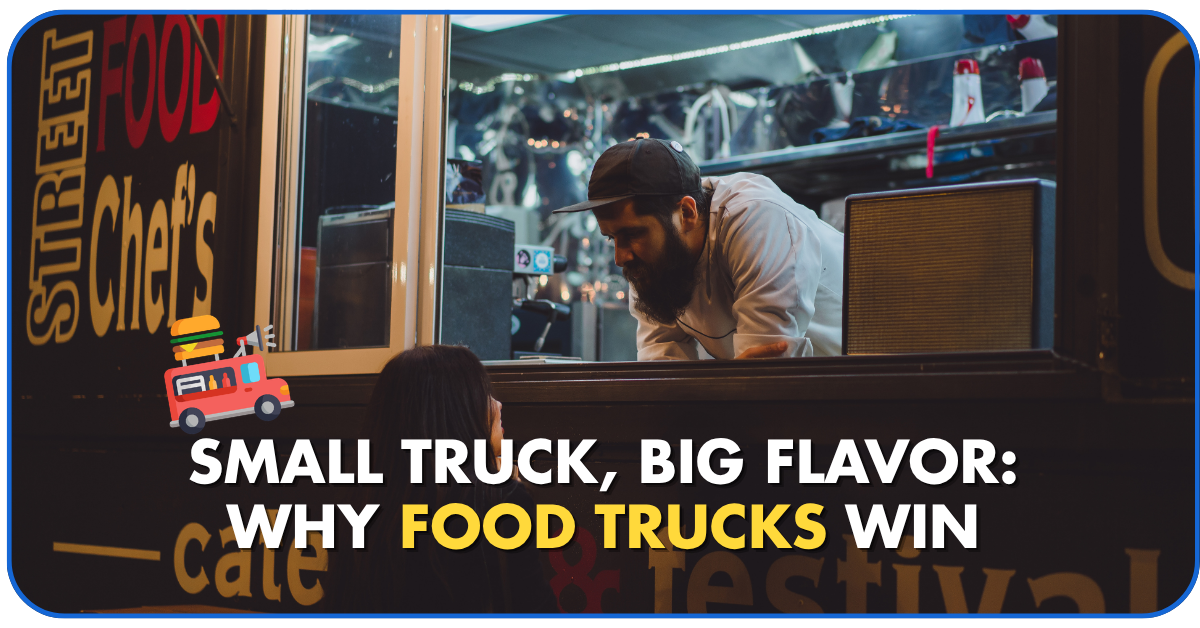
Social media has made food trucks more trendy, making them popular and discoverable by food lovers. Also, it has many other advantages over a traditional food outlet.
- People can start a food truck at a lower cost than a brick-and-mortar restaurant, as it does not include any land leasing or purchase.
- Food trucks are flexible and movable; thus, owners can shift them to areas with high footfall, such as festivals or live events, without being fixed at a particular place.
- Chefs can easily experiment with their new dish concepts and menus in a movable dining space. This will not even require a large sum of money to market these cuisines.
- Food trucks with high-quality products can have loyal local consumers, creating strong community connections.
Guide to A Perfect Food Truck Business Plan
For establishing a fruitful food truck business plan, here’s the step-by-step plan.
Step 1- Creating A Brand with a Unique Concept
To make a food truck business plan successful, one has to be more creative to build a distinct identity in the market. Here’s how it can be achieved for a food truck.
- Decide on a specific signature dish or cuisine. To make it unique, add local fusion ingredients or a particular serving theme, so that visitors can have a memorable experience.
- Give a catchy name and logo to the food truck, aligning with the served food items or signature dish.
- Select a theme for serving food to customers and make it distinctive but unforgettable.
Step 2- Deciding and Designing the Menu
One must remain practical while deciding the dishes for the menu, balancing creativity with efficiency and the mobility of a food truck.
- Dishes must be simple enough that they can be prepared in less time and space.
- Menu size must be limited to reduce setup costs and cooking time; however, it still should offer some variety.
- Offer combo meals, signature dishes, or easy prep side dishes for a smooth ordering and delivering system.
Step 3- Completing the Paperwork Requirements
Before starting the business, one must research what licenses are needed to start a food truck. Operators need to follow similar rules to restaurants to comply with the regulations.
- Business License to run the food truck legally.
- Food service permits meet the health department standards.
- Permits for parking or vending to sell in specific designated areas.
- It also requires liability insurance to cover customer accidents or injuries.
- Property insurance protects assets and equipment from unexpected risks.
Apart from these, food trucks also need to go through regular inspections to ensure sanitation standards, fire safety, and food handling certificates.
Step 4- Managing the Budget and Finance
Starting a mobile dining requires a structured financial plan. Estimated costs are as follows:
- Purchasing or leasing an old food truck will cost $15,000–60,000; however, customized vehicles can be expensive.
- Kitchen equipment, including refrigerators, cooking equipment, and storage, will cost $8,000–24,000.
- License and permit fees vary by city; however, they may range from $2,500 to $7,500.
- Staff, repairs, and other ongoing expenses may range from $6,000 to $20,000.
- For marketing purposes, vendors may have to spend $5,000- 10,000.
To cover expenses, owners can take out small business loans. Additionally, they can also search for investors or partners to reduce personal risks. However, personal savings give more independence to run a food truck effectively.
Step 5- Preparing the Food Truck for Mobile Business
The truck is the most important part of this business; therefore, it matters what kind of truck one buys.
- Leasing a truck offers lower investment initially; however, the vendor has to pay monthly.
- Buying a new one requires high starting costs, but it offers more reliability and warranties.
- Otherwise, operators can purchase used vehicles, offering budget-friendly options and opportunities to customize them.
In a food truck, sellers have a limited space; therefore, they need to be creative and efficient. For this,
- Fix the cooking equipment according to the menu requirements, maximizing the workflow.
- Using energy-efficient appliances can save investment costs.
- Keep backup solutions for fuels, ingredients, and serving utensils.
Step 6- Installing Required Software in the Truck
POS (Point of Sale) software is an essential software for a food truck business. It safely saves data regarding the inventory and daily sales.
- Sellers can use customer information to handle repeated orders and get feedback on their services.
- The software helps in quick money transactions, speeding up the workflows and reducing waiting time for customers.
- It allows owners to accept different payment methods, including cards or digital wallets.
- POS also enables users to store their data in the cloud; therefore, they can access it anywhere.
Step 7- Searching and Choosing the Vending Location
Finding an appropriate location is everything to run a profitable food truck. Therefore, sellers must choose the areas wisely.
- Busy hotspots, including universities, shopping malls, concerts, or nightlife places, are the best places to maximize sales.
- Search for the places with less competition.
- Apart from this, collaborate with local businesses, such as coffee cafes, to have more customers.
- Connect with community event organizers to book spots in their events.
Step 8- Hiring Required Staff and Managing Operations
If owners hire staff for a mobile dining business, teamwork is essential for better performance.
- Whether it is a cook, server, support staff, or owner, they must understand their roles.
- The staff must be trained to bring efficiency to a compact space.
- They must be skilled in customer service, with quick problem-solving and clear communication expertise.
- Owners must manage shifts of staff, assigning them respective responsibilities for a streamlined workflow.
- Assigning a staff uniform can also positively impact customers, creating a feel for the brand.
Step 9- Marketing or Branding of the Food Truck
Marketing is a crucial aspect to succeed in any business. Especially, food trucks grow with their visibility. For this, social media is the best way to make a business visible to more people. For restaurant branding,
- Owners can share their daily updates, such as the truck’s location and special menu, on their social media accounts.
- They can post appealing photos or cooking videos to attract customers.
- Offer promotional programs offering discounts on combo deals and special dishes.
- Encourage customers to post and tag about the provided services on their personal social media accounts. They can also share reviews and tell others to visit the place.
- Operators can also collaborate with local influencers and food vloggers to feature on their social media accounts for an expanded reach.
For this purpose, truck operators can also join hands with digital marketing agencies in their areas to advertise their businesses.
Step 10- Expanding and Growing Business
Once a food truck is established, owners must think of scaling up their businesses.
- They can own multiple food vehicles or switch to a fixed restaurant.
- Additionally, vendors can expand their dish menu, introducing more healthy and fusion dishes.
- They can also offer catering services at parties or weddings.
- Stay updated about the industry trends, following the cultural and dietary trends.
Avoiding the Mistakes to Build a Successful Business

While trying to achieve the best, people make many mistakes that impact their businesses negatively. Some of these mistakes that have to be avoided when starting a food truck business.
- Always keep menus small because owners create complex menus in trying to provide their customers with too much, complicating things in the small kitchen. This also adds up to initial costs due to increased ingredient prices.
- Never ignore regulations; it can earn owners heavy fines. Sometimes, incomplete paperwork can lead to the shutdown of a business.
- Spend money, keeping in mind that there will be many hidden expenses, including fuel, entry fees for events, and truck maintenance. Therefore, manage the cash flow wisely for smooth operations.
- Always ask customers for dish reviews and suggestions to improve the food truck’s reputation and popularity. Try to build genuine relationships with customers so that they recommend your business to others.
Challenges to Face in a Food Vending Business
Although the food truck business offers many benefits, it also comes with some challenges. For example,
- Getting permits and licences can be a strict job in many cities. Also, operators may have to go through complex health inspections following stringent regulations.
- Due to the limited space in a food truck, sellers can prepare only a few dishes.
- Additionally, food sales greatly depend on the weather. Extreme climate conditions may reduce customer engagement.
- Popular spots can be filled with multiple dining vehicles, increasing the competition.
- Being a movable mini restaurant, trucks require constant repairs, hence adding to maintenance costs.
Food Truck Business Plan- A Futuristic Approach in the Hospitality Industry
Starting a mobile dining business is one of the most profitable ways in the food service industry. People who are interested in cooking creative cuisines can turn their hobby into a successful profession with passion and planning.
They may face some hurdles in the starting period, but with time, they will definitely achieve success. If you are also thinking about how to start a food truck business, we hope this blog will help you take the first step.
Start brainstorming attractive menus and designing your truck. We wish you the best for your future endeavors in the food sector!
👉For more business ideas, read other blogs from New Traffic Tail
👍 How to start a mushroom business in India?
👍An Absolute 8-Step Guide on How to Start a Laundry Business?
👍How to Start a Nursery Business: Planting Success in 8 Steps
FAQs
Q1: How much money does a person need to start and operate a food truck?
The overall costs may range from $25,000 to $ 200,000 to establish a fully furnished food vanity, including truck, kitchen equipment, fees, and ingredient expenses.
Q2: How can I prepare a menu for my mobile dining setup?
While selecting dishes for your food truck menu, you have to consider many factors. This includes prep time for the cuisine, ingredient costs, and popularity of the food item. Try to keep the menu simple to reduce serving time and enhance work efficiency.
Q3: Is insurance mandatory for a food truck business plan?
Yes, vehicle insurance and liability insurance are required to keep your business safe from unexpected accidents.
Q4: How is food hygiene and safety maintained in a food truck business plan?
One has to keep the kitchen clean, ensuring safe food storage and handling. Carefully read and follow the guidelines issued by the Food Safety and Standards Authority, for example, the FDA (Food and Drug Administration) in the USA.
Q5: How can vendors set prices for menu items?
They must calculate all the expenditures, including ingredient costs, fuel, labor, and other ongoing expenses. Then, add some margin to earn profits in food combo prices. Vendors must also research the market to set competitive rates.
Q6: How can owners manage supplies for their food trucks?
Owners can connect with local providers, such as farmers, for fresh vegetables. Also, they can buy other essentials from local supermarkets.
Q7: How can sellers handle customer complaints and feedback?
Owners must reply promptly to any kind of customer feedback. They must appreciate the positive comments. They must solve the complaints with affirmative responses, ensuring that they improve in the future.